
June 5, 2026
Author: Mateusz Doniec
Interview conducted by: Viktor Nedvyha, Mateusz Doniec
Translation into English made with the support of artificial intelligence tools.
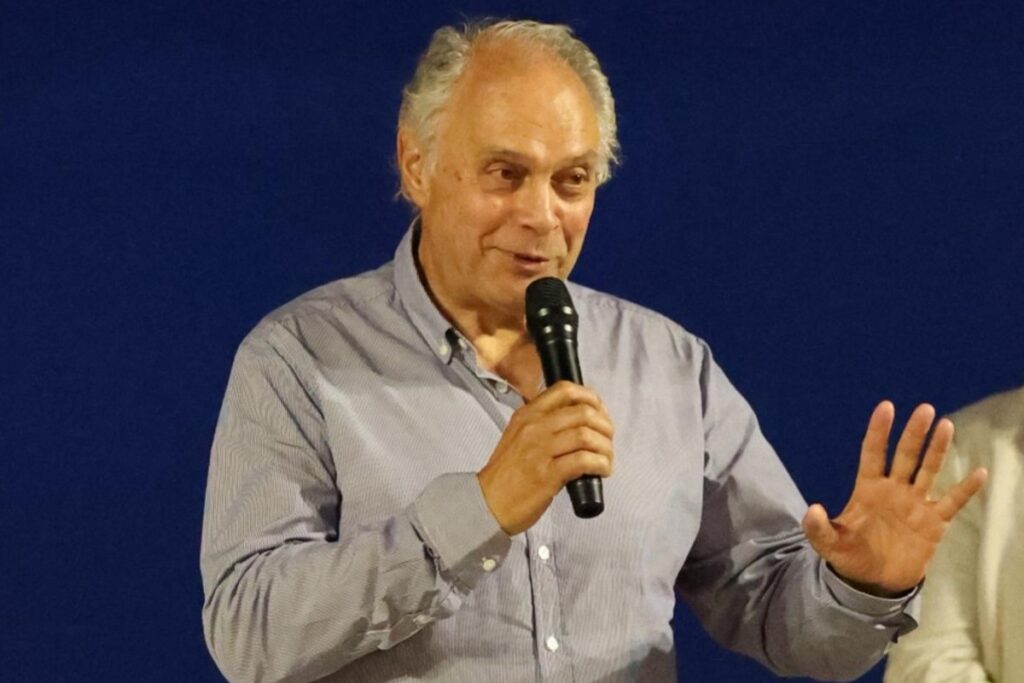
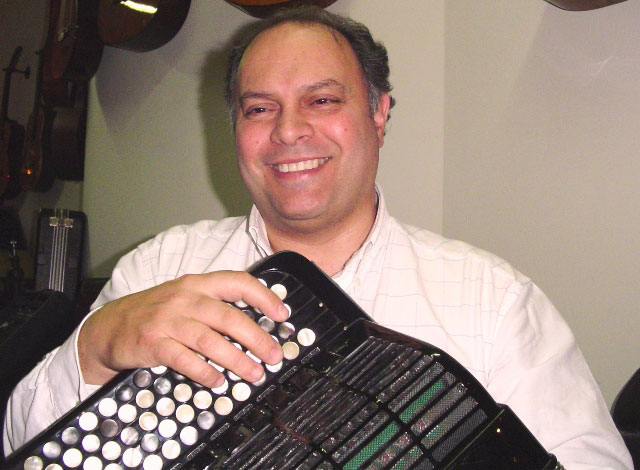
Aníbal Freire is a leading Portuguese accordionist, teacher, and music promoter. He witnessed the process of bringing the accordion into Portuguese higher education – and played an important part in it. As a performer and teacher, he has been one of the most important figures in Portuguese accordion life for many years.
He studied under, among others, Vitorino Matono, Elsbeth Moser, and José Manuel Azkue. He has served on the jury of many national and international accordion competitions. He is also widely known as the organizer of the International Accordion Week in Alcobaça, the latest edition of which ended just a few weeks ago. He is also the founder and president of the Portuguese Accordion Association and the Orquestra Típica e Coral de Alcobaça.
As a performer, he won first prizes at, among others, the Accordion National Trophy, the Accordion World Trophy (1972 and 1974), the International Certame (1979), and many other prestigious competitions. In 1990 he founded his own music school, Serenata, in Alcobaça, and continues his teaching work successfully to this day. He is associated with the University of Aveiro, and his students have been winning top prizes at major national and international accordion competitions for many years.
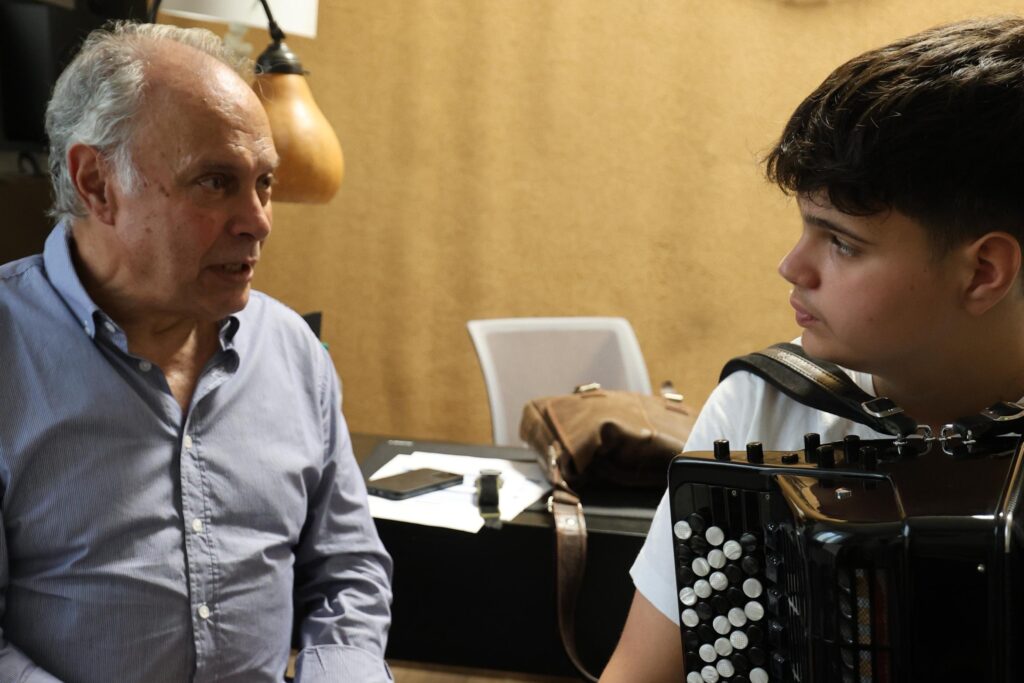
He regularly gives masterclasses in Portugal and across Europe. It was at one such event – the CAM Accordion Festival – that I had the chance to speak with Prof. Aníbal Freire about the International Accordion Competition in Alcobaça, the history of Portuguese accordion playing, and his connections with Poland.
What is your impression of this year’s International Accordion Competition in Alcobaça?
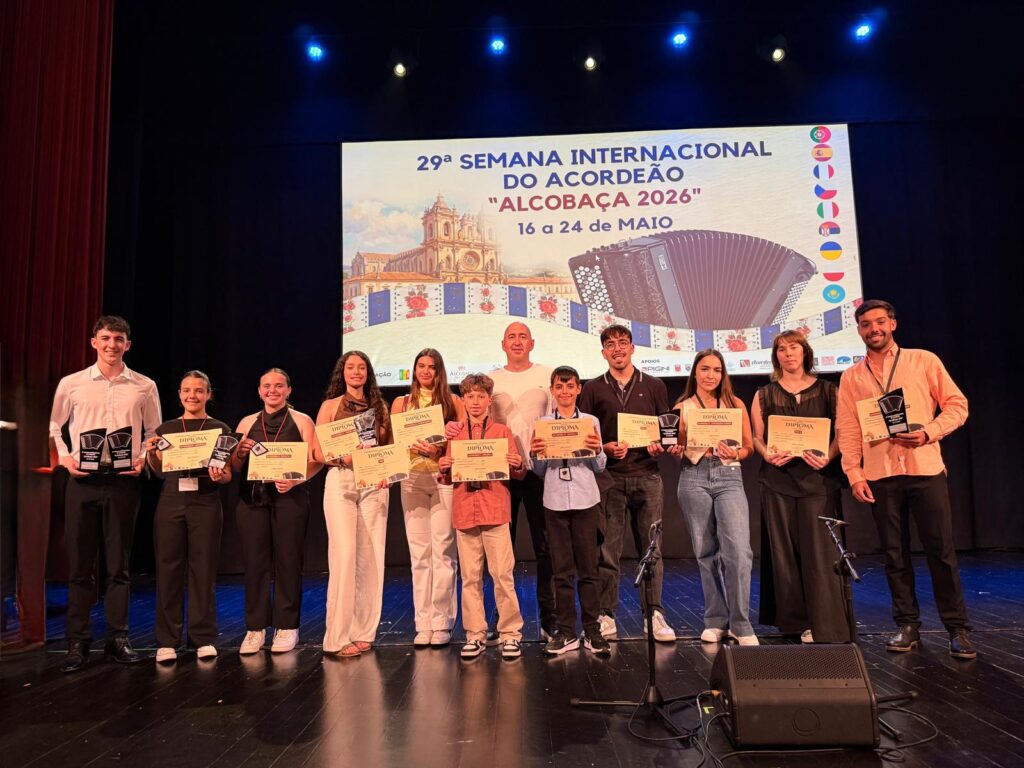
The Alcobaça competition has a 29-year tradition. In fact, it consists of two events – a national competition and an international one – both held as part of the International Accordion Week. I am very pleased, because this year we had a record number of participants.
The audiences also showed up in good numbers at the concerts, which were at a very high artistic level. Everything came together in a positive way – the artists were happy not only with their performances, but also with the audience’s response. There were also very valuable masterclasses, and the yoga for musicians led by my daughter, Diana Freire, attracted a lot of interest.
For me, as someone who always puts quality first, this year’s edition was a source of great satisfaction. I hope the next one will be even better, because we must always strive to improve and keep pushing forward. Always.
Polish accordionists had to travel a very long road before the accordion was recognized as a full academic instrument. Were the experiences of Portuguese accordionists similar?
Yes, it is not an easy story. As we know, the accordion comes from folk music tradition – in Portugal as well. One interesting thing about us Portuguese is that new ideas and trends tend to reach us with some delay. As a joke, one could say that before something reaches us, it first has to cross the Alps, then the Pyrenees, and finally the Serra da Estrela.
It was the same with the accordion. For a long time it existed mainly in folk music, while the classical accordion community was small and quite isolated. In a way, we were a lonely island. I remember being the first accordionist in Portugal to play an instrument with a converter, which shows well how early a stage of development classical accordion playing was at in our country.
When it comes to the accordion’s place in Portuguese music education, progress was very slow. In Spain, the accordion entered the conservatory in Barcelona first, then in Madrid. In Portugal, it was much harder to convince conservatory directors and teachers to include the instrument in their programs.
So I kept promoting the accordion. I gave concerts, showed what the instrument could do, and tried to prove that its natural place was in the conservatory. Over time, this work paid off. Accordion classes began to open in more and more places, and today the instrument is present in conservatories across the whole country – from north to south. Step by step, the goal was reached.
The next step was bringing the accordion into universities. It is worth noting that the International Accordion Week had a big influence on this process. The success of this event helped grow interest in the instrument and made it easier for it to enter higher education. Today the accordion is present at three Portuguese universities.
Over the years I was very active in promoting the accordion – both in the music world and among audiences. I gave many concerts and tried to show what the instrument could do to as many people as possible. I remember times when only eight, nine, or ten people came to a concert. Today the situation looks completely different. Concert halls are full, and classical accordion concerts often draw three or four hundred people. This shows how far the accordion has come in Portugal.
The early days of the festival in Alcobaça were also very hard. During the first edition I promoted it myself. I put up posters around the city, often late at night – at midnight, one or two in the morning. I ran through Alcobaça like a pirate of the Caribbean, with a brush in one hand, a bucket of glue in the other, and posters under my arm. I visited restaurants, shops, and local institutions, asking for support and help in promoting the event. I never gave up. I always fought for the festival and for the accordion’s place in the musical life of our country.
Today things look completely different. With the support of sponsors we have much greater resources. We can put on more concerts, invite more artists, and organize more masterclasses. The festival keeps growing and becomes a bigger and more important event every year.
One symbol of Portuguese musical tradition is fado. Do Portuguese classical accordionists bring elements of fado into their artistic work? Do these two musical worlds meet?
Fado is to the Portuguese what flamenco is to the Spanish, tarantella to the Italians, or musette to the French. It is the national music of Portugal, listed as UNESCO intangible cultural heritage. One could even say that a Portuguese person who does not sing fado and is not moved by it is like a „prefabricated Portuguese” – missing an important part of their identity.
Fado is a very old and deeply rooted musical tradition. It is no surprise, then, that today it often serves as a source of inspiration for composers and musicians connected to conservatories and universities. Elements of this tradition are increasingly finding their way into classical music, including music written for the accordion.
I myself composed a piece called Homenagem ao Fado, which I dedicated to my father. It is my personal tribute to this tradition, which is one of the most important parts of Portuguese musical culture.
When you hear the word „Poland”, what images, memories, or thoughts come to mind first?
When I hear the word „Poland”, I think of a country that is very far from Portugal geographically, and one with which we did not have much cultural contact over the years. At the same time, I have one very clear memory connected to Poland.
About forty years ago, a Polish trio of two accordions and percussion performed at the Calouste Gulbenkian Foundation in Lisbon, one of the most important cultural centers in Portugal. They played contemporary music. I was working as an accordion teacher in Lisbon at the time, and I went to the concert with a few colleagues. To be honest, I was probably the only one in our group who really enjoyed it. I will say more – I would gladly go back in time today to hear it again. It was completely contemporary music, full of illustrative effects. There were sounds imitating wind, birdsong, and various sounds of nature, as well as very high registers. And it is this memory that comes back to me most often when someone mentions Poland. It is the first thing that comes to mind.
I also associate Poland with the Trophée Mondial competition. Over the years, many excellent Polish accordionists took part in it and left very good memories. I was also very happy to see Polish participants at this year’s competition in Alcobaça. The accordion orchestra from Poznań made a particular impression on me. I thought to myself: „How is this possible? So many kilometers – from the eastern part of Europe to Lisbon, and then all the way to Alcobaça.” I was truly very happy to see them there. It always gives great satisfaction when musicians from such distant countries decide to come to Portugal and take part in an event that we have been building together over the years.
There has not been much contact between Portugal and Poland, but I have always had great respect for Poland and the Polish people. Polish accordion playing has been at a very high level for many years, and your country has produced many outstanding accordionists. I therefore follow the development of the Polish accordion community and its presence on the international stage with great admiration.
Do accordion students in Portugal play music by Polish composers?
I must admit that in Portugal, knowledge of Polish accordion repertoire is not very wide. Polish music appears relatively rarely in teaching programs and concerts, which I genuinely regret, because I have had the chance to get to know at least some of it and I value it highly.
I heard many excellent Polish pieces at the Trophée Mondial competitions. The compositions of Bogdan Precz made a particularly strong impression on me. I believe that Polish accordion music deserves a much greater presence in Portugal.
I think this is an area we should work on together. Both Polish and Portuguese musicians could get to know each other’s communities and each other’s composers better. Contacts between Poland and Portugal are not very strong, but I believe that through initiatives like the participation of Polish accordionists at the Alcobaça festival, the situation will gradually change. I am sure that in the future our communities will work together even more closely.
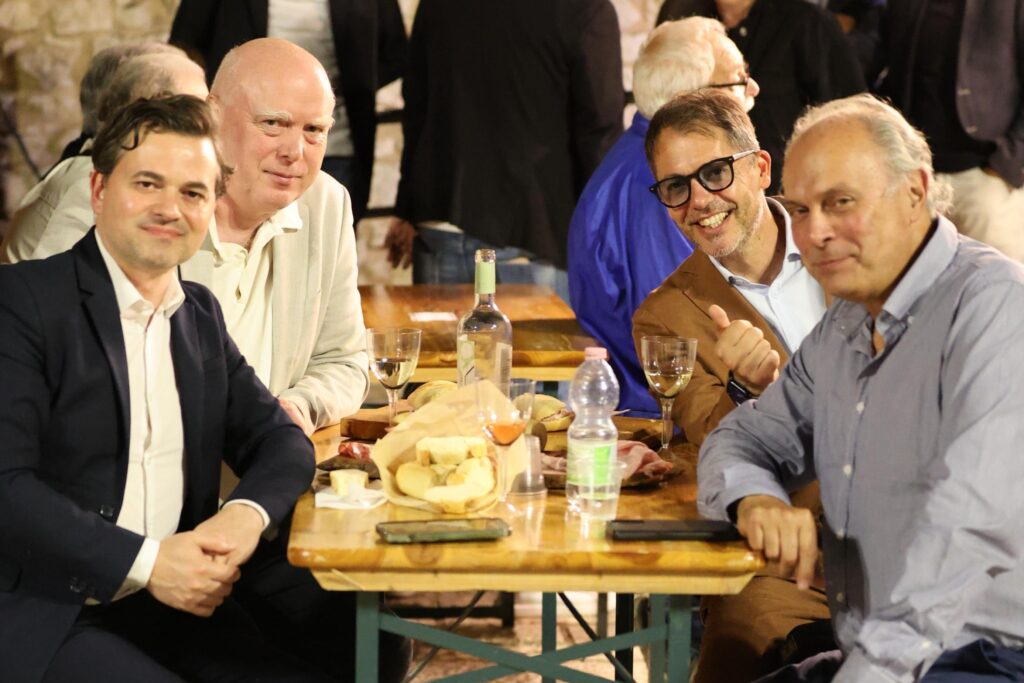
Source: https://www.pigini.com/artisti/anibal-freire/ [accessed: June 5, 2026]
Dodaj komentarz