
15 September 2026
Date of interview: 1 June 2026
Author: Mateusz Doniec
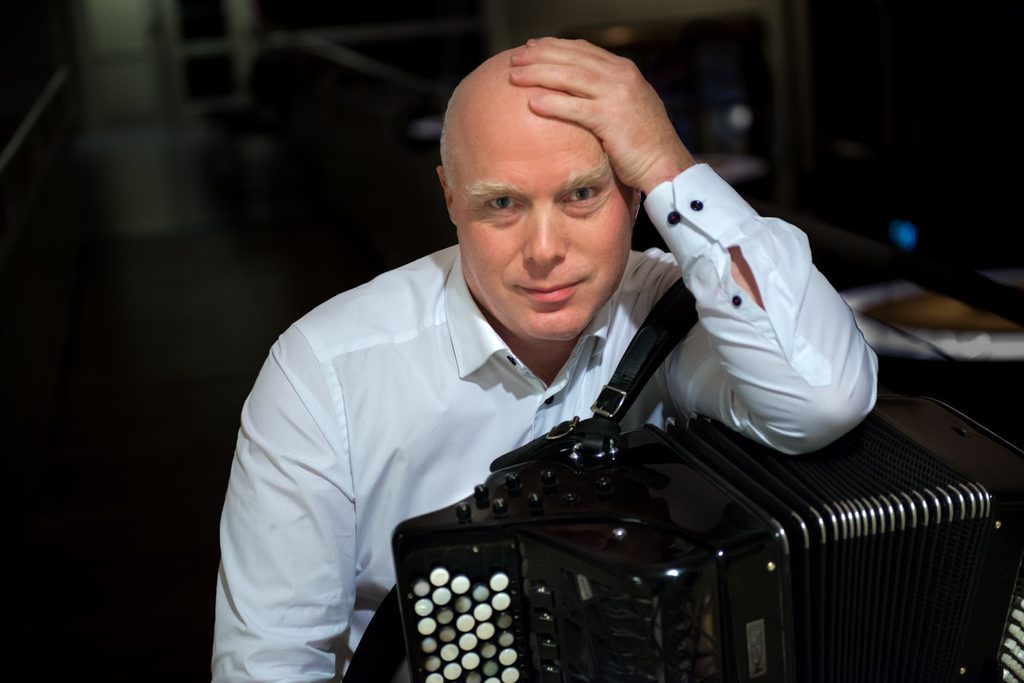
Professor, thank you very much for giving me the opportunity to speak with you and for agreeing to share your experiences and reflections on the accordion. We are speaking during the CAM Accordion Festival, which is taking place in the Italian town of Villa Castelli. One of the main elements of this event is the masterclasses, which you have been teaching for many years. Do you enjoy this kind of interaction with young accordionists? In your opinion, what is the greatest value of such workshops?
I very much enjoy this kind of event. I have organized similar courses and workshops myself in Norway. I believe they are extremely inspiring for the younger generation because they provide an opportunity to meet new teachers and receive fresh musical impulses that can later be developed independently and worked on further.
I try to support the development of the accordion, so this way of sharing my experience gives me great pleasure. I have been coming to Puglia regularly for many years, and I very much enjoy being part of this community. Watching the festival develop over the years is also inspiring for me. Organizing an event of this kind is not an easy task, and Angelo1 is doing a truly excellent job. He invites both internationally renowned teachers and outstanding educators from Italy, creating a very valuable combination of different experiences, traditions, and approaches to music.
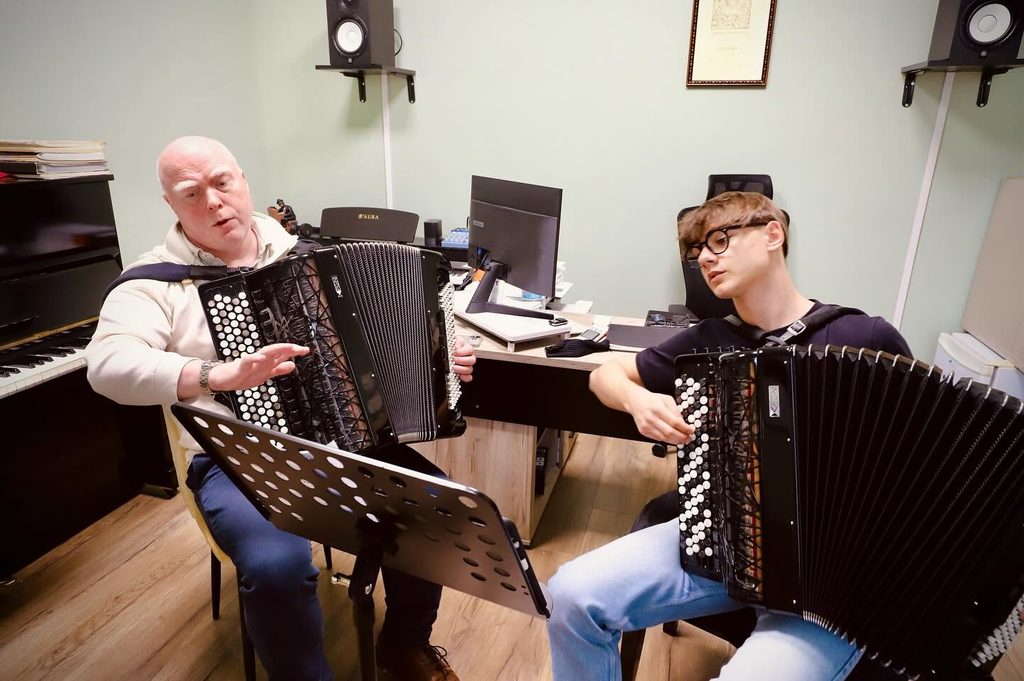
(source: facebook.com/cam.centroaccademicomusicale)
Do you think that anyone can take part in this kind of workshop, regardless of age and level of proficiency?
Generally speaking, yes, although it is, of course, helpful to have at least some basic skills – simply being able to play something. It certainly does not have to be an academic level. The ability to read sheet music is also useful, but for me it is not the most important thing. I have no problem working with people who could be described as amateurs. What matters most is that we enjoy music together and contribute to the development of the accordion.
I think that the workshops organized as part of the CAM Accordion Festival also serve to bring together different accordion communities and people with varying levels of experience. Younger and older participants, professionals and amateurs, all meet here. This diversity encourages mutual inspiration. Beginners have the opportunity to observe more experienced players and learn from them, while advanced musicians can be reminded that they themselves were once at the beginning of this journey. I believe this is extremely valuable for both sides.
You were a student of Mogens Ellegaard, one of the most important figures in the history of the accordion. How do you remember him?
First and foremost, he was the first pioneer of the accordion in the world of classical music. If we consider when the development of the classical accordion began, most people would point to 1958, when Symphonic Fantasy and Allegro, Op. 20 by Ole Schmidt was composed, or to 1960, when Toccata No. 1, Op. 24 was first published. Of course, there were earlier works that could be associated with the world of classical music, but in my opinion these two compositions became the starting point for further development. Mogens Ellegaard was the person who set this process in motion.
I remember him from my childhood. He had a very close relationship with my accordion teacher in Norway – they were friends. He would come and stay with us for a week, teach all the children, then leave to perform Anatomic Safari or something similar, and later return again. We hardly understood what he was saying, but it was incredibly inspiring for us. He came from Denmark, which at that time seemed very far away to us – almost frighteningly far away. My music school also organized trips to Copenhagen so that we could be closer to his work. I am grateful to my teacher for creating that connection with Mogens, because without it we certainly would not be sitting here today.
The moment when, I think, we made the strongest impression on each other came when, as an eleven-year-old boy, I played a Scarlatti sonata for him. He often referred back to that meeting later, saying, “Wow, that eleven-year-old boy from Norway played really well.” It was also around that time that I first began to think that Copenhagen might be the place where I would like to study. That idea had been with me since I was eleven years old. Of course, I had the opportunity to study elsewhere as well, but to be honest, I never applied anywhere else. From the very beginning, Copenhagen was where I wanted to study.
The beginning of my relationship with him also says a great deal about his personality. He cared deeply about the next generation of musicians. He considered the development of young accordionists to be extremely important and fascinating because, in his own generation, he was largely on his own. As an innovator, he understood perfectly well that if all of this was to survive, he needed to build solid foundations and invest in future generations.
The plans that first emerged in the mind of eleven-year-old Geir Draugsvoll became a reality a few years later, when you began your studies at the Royal Danish Academy of Music in Copenhagen in Mogens Ellegaard’s class.
When I moved to Copenhagen in my late teens, Mogens Ellegaard already had a very strong accordion class. Among the students there was, for example, my future colleague James Crabb from Scotland. Together, we formed an environment for growth and development that was truly unique in the accordion world at that time. Mogens was fully aware of this.
He took care of his students and made sure that we felt comfortable. His way of thinking about students – not as his own children, of course, but as the future of the accordion and the next generation of musicians – was something very special. He wanted the accordion to develop in the right direction, and he also wanted us to be able to make a living from music in the future. He supported me throughout my studies and helped his most talented students find their direction. On many occasions, he advised me on which decisions were worth pursuing. For example, as early as 1987, he sent me to the Hugo-Herrmann-Wettbewerb in Trossingen. A year later, I competed alongside instrumentalists from other disciplines at the Nordic Soloist Biennale. These experiences opened up tremendous opportunities for my development.
I felt very privileged, fortunate, and grateful to be under his wing and to be his student, because he possessed an extraordinary understanding of how to build an academic model of musical education. Perhaps this was one of his greatest strengths – he understood the importance of this process at a very early stage, at a time when very few people paid much attention to it. Others tended to operate more within what I would call an accordion ghetto. I apologize for the expression, but that is how I see it. He, on the other hand, consistently believed that it was necessary to take a step toward the wider musical world. That was his greatest mission and his greatest challenge. Perhaps it was also one of his most important achievements, because in my opinion he was the first person to actually take that step into the world of music that he spoke about so often. And I was fortunate enough to be part of that process.
His collaboration with a large number of composers and other instrumentalists meant that, although he was already an outstanding musician from the very beginning, he continued to develop even further – there is no doubt about that. Composers challenged him constantly. They would ask, “Why does the instrument have to sound like that?” or “Why can’t you do this?” They continually presented him with new challenges that forced him to reflect, and ultimately to create a framework for defining what makes the accordion an interesting instrument within the world of music.
In your opinion, what is Mogens Ellegaard’s legacy?
Mogens reached places that, at the time, seemed almost unimaginable. He performed with symphony orchestras, gave the world premieres of works that are now considered classics of the accordion repertoire, and found himself in situations that other accordionists could not even imagine. It was this that paved the way for future generations. He showed us that, in fact, almost nothing is impossible.
He worked extremely hard. Every day, he would get up at six o’clock in the morning and practice for several hours before the rest of the family woke up. Today, many young people think it is enough to get up at nine and arrive at the academy ten minutes before class. He lived in a completely different way. Perhaps this was also because his beginnings were very different. He came from the world of popular music, where he was in fact highly successful – he appeared on television and performed extensively. But that was not a sufficient challenge for him. He wanted to enter the world of classical music.
The opportunity to learn from him as a child and as a young man was a great privilege and a tremendous source of inspiration. He was a personality whose presence is still greatly missed in the accordion world. He belonged to a generation of people who were able to provide direction for many initiatives and who possessed a long-term vision for development. Today, we have far more individualists, but it is not the same. I no longer see the same sense of unity within the accordion community that existed when Mogens was still with us.
His pioneering work, carried out from the 1960s until his death in 1995, created the foundations upon which future generations could continue to build. It was very important to him that his achievements would be carried forward and further developed.
What was your relationship with him like after you completed your studies?
I graduated three years before his death. That gave us only three years, during which he was already partly struggling with illness and partly devoting his time to other talented students. As a result, we did not have the opportunity to develop a particularly close relationship as colleagues.
We did not work together professionally either. I did teach masterclasses, but I never worked alongside him at the academy. It was only after his death that James and I took over his position. From that perspective, I cannot really say very much about our relationship after I had completed my studies.
The opportunity to work with Mogens Ellegaard was certainly a great privilege. However, you also had the chance to collaborate closely with Sofia Gubaidulina. What do you remember most from that collaboration?
(After a moment of reflection, a smile, and a deep sigh…) I think, first and foremost, her eyes.
She was an extraordinarily humble person, yet at the same time she possessed such depth and intensity that anyone fortunate enough to work with her received inspiration for a lifetime. There are very few people I could compare her to.
Of course, she collaborated with a great number of musicians, including many accordionists. However, I had the pleasure and great privilege of working closely with her for more than thirty years. What has remained with me most strongly is her view of art and the way she understood the role of art in society.
Of course, I have countless memories connected with her. One should remember that she listened to me perform Fachwerk probably more than thirty times in concert halls. This made my relationship with the work grow deeper and deeper. Not only because she was present, but also because her very presence brought something special to each performance. When the most important and influential artistic figure of our time is sitting in the audience, you feel as if you are painting a picture while Picasso is standing beside you, watching your work. I was incredibly fortunate. I felt privileged and honored to be within her orbit.
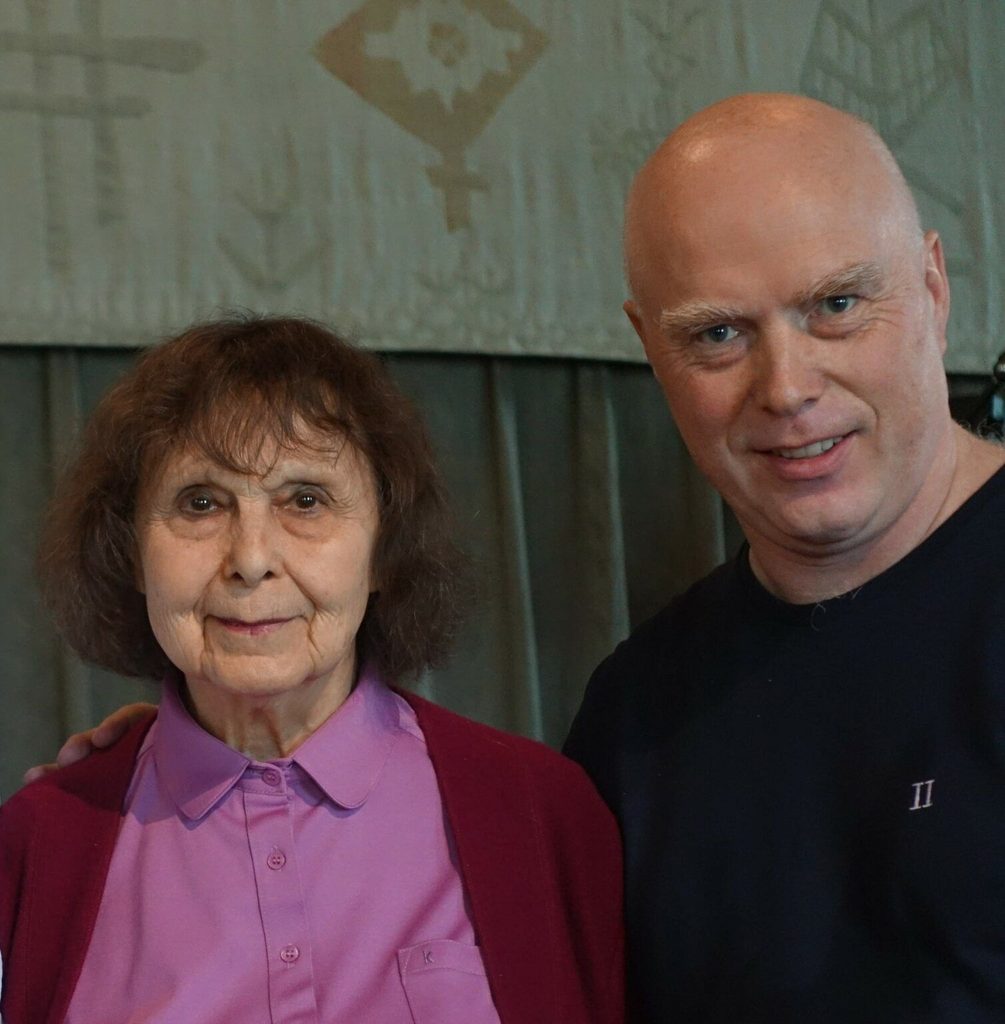
How do you remember your first meeting with her?
We met in 1994. Of course, I remember that moment very well, because by then she was already Sofia Gubaidulina. I played De Profundis for her. Naturally, I performed the piece as well as I possibly could. When I finished, there was complete silence.
Complete silence.
It lasted for a very long time. I remember thinking, “My God, was it really that bad?” At that time, she did not yet speak German very well, so she was using the help of a translator. After a pause that felt like an eternity, she began to talk about how much she appreciated the way I had treated time in her music. She spoke specifically about time. I was very happy to hear that she shared my ideas about the interpretation of De Profundis. She said that she had heard the piece many times before, but never in that way. Looking back on it now, I am convinced that she was referring to the sense of temporal space that I had dared to create in my interpretation. In the years that followed, she returned to the subject of time many times during our conversations.
I also played Silenzio for her, and she was deeply moved by the performance of that piece as well. She immediately said, “You have to record this.” The memory of that meeting remains extremely vivid for me.
How did Fachwerk, one of the most important outcomes of your long-standing collaboration, come into being?
Her intensity, her personality, but also – let us call it – her concentration. It is very difficult to describe, but these qualities felt incredibly close to me as an artist. Her approach to work was very similar to my own. In a sense, we understood each other from the very beginning. Even then, the idea emerged that she should write a piece for me. We simply did not yet know what kind of piece it would be. We discussed various ideas and different directions in which our collaboration might develop.
In the end, it resulted in Fachwerk – fifteen years later, after many obstacles and complications. However, once the work was finally completed, it proved, in my personal opinion, to be absolutely worth the wait. I think that for many people who observe the world of music from the outside, especially those beyond the accordion community, this is the accordion concerto they know. They are not familiar with many other accordion concertos, perhaps with the exception of Sieben Worte, but that is, after all, a double concerto rather than a solo one. For me, it was definitely worth waiting for. Working with her on this piece was a tremendous pleasure.
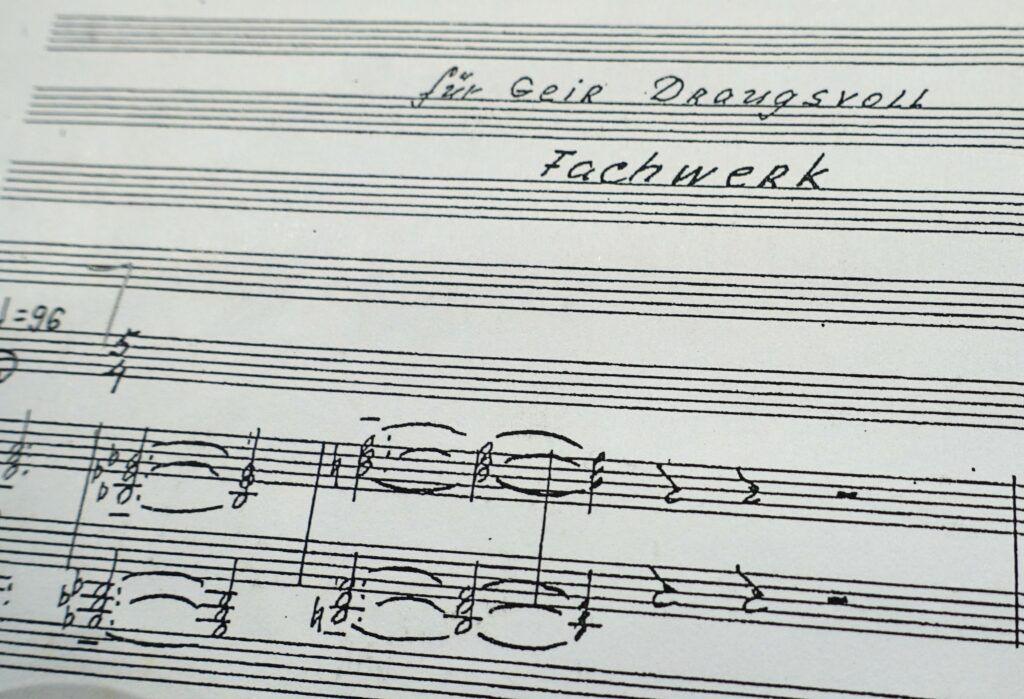
I also remember that part of the piece reached me only two weeks before the world premiere. By that point, I no longer had the courage to postpone the premiere once again, because it had already been delayed several times before – Sofia had fallen ill, and various complications had arisen – but eventually the score simply arrived. There was very little time left, so it was an extremely intense period. Sofia was present throughout the entire week of rehearsals. We worked both on the orchestral part, which ultimately remained almost unchanged from the beginning, and on the accordion part. The cadenzas, in particular, required very intensive work.
What was wonderful about her was her ability to adapt. I greatly valued her flexibility. She was not someone who insisted on every note being played exactly as it was written. She had a remarkable ability to sense what was best for the music. Some composers are completely different in that respect. If every note is not played exactly as written, they simply cannot accept it. As a result, the music does not always achieve the best possible outcome. Of course, this did not make my job any easier – it would have been much simpler for me to play exactly what she had written. However, this kind of artistic ping-pong between us proved to be extremely valuable for the final shape of the piece.
I should also mention the structure of the work itself. Her way of constructing musical form was brilliant. Of course, she was a genius, so that should come as no surprise. What was remarkable, however, was that she allowed a performer like me to take part in shaping certain colors and details of the piece. For me, once again, that was a tremendous honor and something incredibly exciting.
Your beautiful collaboration, which lasted for many years and began with De Profundis and Silenzio, came to an end with Hell und Dunkel…
At one point, accordionists began performing her organ work Hell und Dunkel. I said to her, “So many people are already playing it, or want to play it. Perhaps we should prepare an official accordion version so that people do not have to come up with their own solutions.” She thought about it for about ten seconds and then replied, “No.” She said that she did not want such a version. For me, the matter seemed settled – it was a very clear answer. After another ten seconds, however, she added, “I would like a version for two accordions. And I would like you to do it.”
It was less than ten years ago, but still before the pandemic. Time passed, and I was very busy, so for a long while I could not find the time to begin working on the project. It was only around 2020 that we finally started working on it. I recorded excerpts of the piece for her in a rather unusual way – without going into the details – and she would listen to them and give me her comments. I would then make revisions and record new versions.
This is how the authorized version of Hell und Dunkel was created. I had the pleasure of performing it in public for the first time last year. Before she died, she was able to listen to the whole piece in a video recording and approve it. So it is possible that this was the last work of hers to be premiered – perhaps even her very last work…
Your collaboration with Sofia Gubaidulina was not limited to the relationship between composer and performer.
There is one story that I never expected to experience. Just before the pandemic, our mutual friend, the double bassist Alexander Suslin, called me and asked, “Would you like to perform a concert with me, with Sofia, and with a musician playing trombone and percussion?” I reacted enthusiastically and immediately asked about the program. The answer was: “We’ll perform In croce, then some solo piece by you, and after that we’ll improvise together.”
I am not an improviser; in fact, I almost never improvise. But I thought to myself: to improvise with Sofia Gubaidulina? Of course! So I agreed. Just before the pandemic, we performed an extraordinary concert in Hamburg. We improvised together, and it was a fantastic experience. There is even a recording of that event, but unfortunately I do not have it. I must get hold of it someday.
I not only had the opportunity to perform her music, but also to share the stage with her. It was a true honor and a tremendous pleasure.
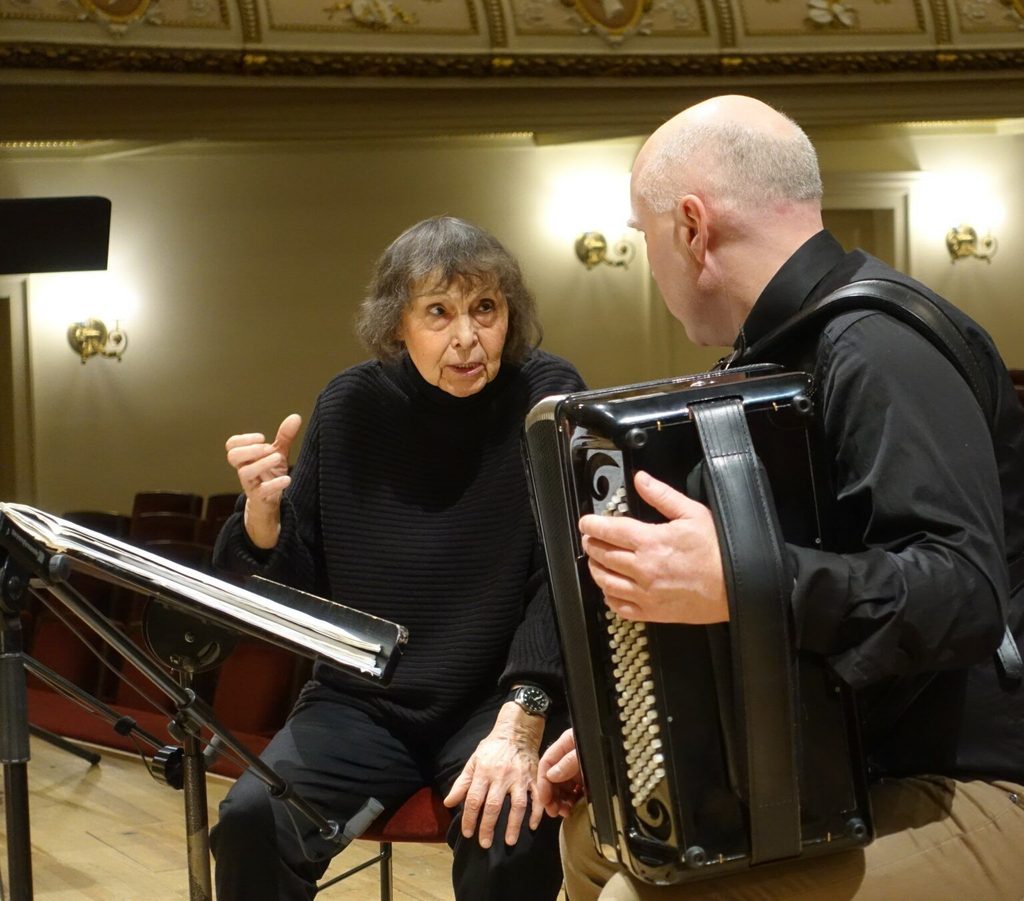
(photo: Bodil Maroni Jensen)
Very few accordionists can boast a career as rich and remarkable as yours. Do you feel fulfilled as an artist, or do you still have goals and dreams that you would like to achieve?
Yes, I have done many things. To be honest, I do not think there is much left that I have not already achieved. This year, I released an album with the London Symphony Orchestra. What could possibly be beyond that?
I have performed with the greatest orchestras and appeared at truly major festivals. Throughout my life as an accordionist, I have also had the opportunity to give the world premieres of extraordinary works. For that reason, I do not think there are any major performing goals left for me to achieve. Of course, that does not mean that I will stop performing. It is simply no longer my primary goal.
I would like to focus on passing on some of the knowledge and experience I have gained during forty years as a professional accordionist. I would like to pass it on to the next generation. I am interested in working with talented students, helping them find the right direction, and supporting their development. I would like to pass the baton to the next generation, although that may sound a little presumptuous.
Last year, I took part in a symposium at the Academy in Copenhagen. It was not related to the accordion, but rather focused on interdisciplinary exchange and sharing of experiences. I observed the teaching of one of my colleagues, a violin professor at the academy, and she observed mine. It was during that symposium that I began to reflect on the future direction of my academic career. I realized that I belong to the generation that studied with Mogens Ellegaard. I did not just read about him – I was actually his student. I received first-hand knowledge about the composers with whom he collaborated. Moreover, I myself have probably worked with three times as many composers. The knowledge I possess today represents a very important part of the history of the accordion’s development. That is why I increasingly feel that passing on this knowledge is now more important than preparing new premieres or pursuing further artistic ambitions. I care deeply about preserving and documenting experiences that, in some cases, perhaps only I still possess.
I am now at an age where I can say to myself, “I can still play.” My age is not a problem at all. At the same time, I am aware that there are others who can do it just as well. What I feel more and more strongly, however, is a responsibility to pass on certain knowledge that might otherwise be lost. In fact, this is not only about teaching. There are probably a few other things I should do before I retire and start lying by the pool. I think that is the direction I will be heading in over the next few years.
But I think that even in retirement I will still play here and there from time to time. I will probably never turn down an opportunity to perform Fachwerk, because I have played that piece so many times that, in a sense, it has become my piece. As long as I am physically able to perform it, I will continue to play it.
When you hear the word “Poland,” what is the first thing that comes to your mind?
It certainly would not be the national football team (laughs). At different stages of my life, I would probably have answered that question differently. Today, the first thing that comes to mind is the legacy of Andrzej Krzanowski and the Alkagran Festival. I have been invited there for many years, I have observed the wonderful work of its organizers, and I truly believe that the festival is developing in the right direction. The work carried out by Andrzej’s wife, Grażyna, and his daughter, Jagna, to preserve his legacy is immensely important for the accordion community. The focus on original accordion music is absolutely essential and of fundamental importance to the accordion world. If we want to have our own identity as an instrument, we will not achieve it by borrowing music written for other instruments. There is really no room for debate on this point – we need our own repertoire. Many competitions and festivals are largely centered on adapted music, whereas Alkagran focuses on original accordion works. I have tremendous respect for that work, and I follow its results with great enthusiasm.
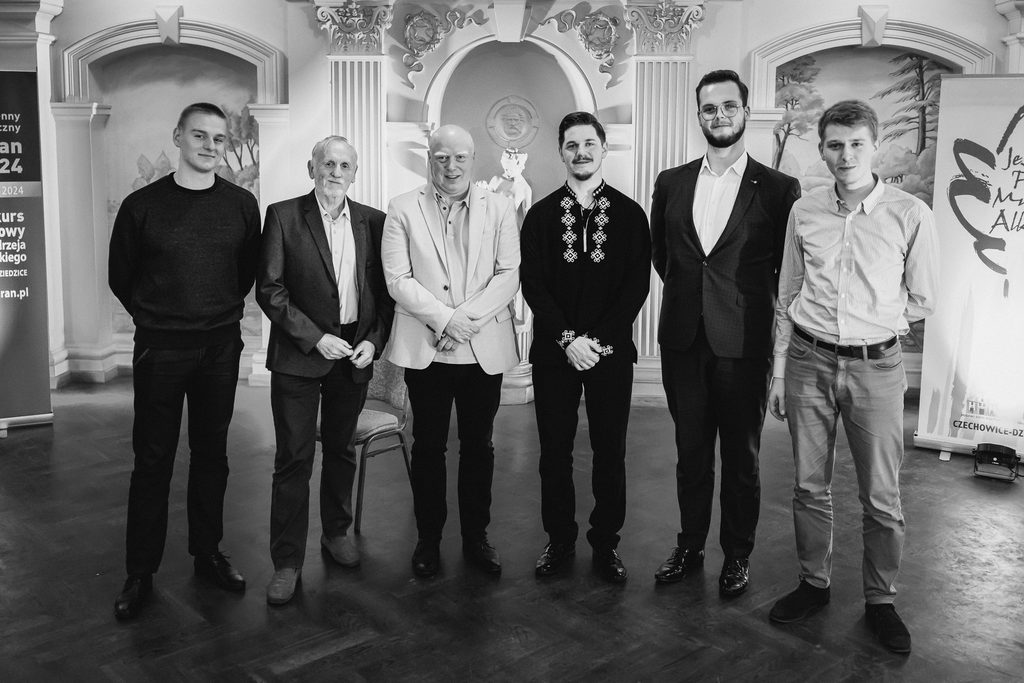
(photo: Jacek Bieniek, www.magiaobrazu.com)
If I look further back, of course I remember Włodzimierz Lech Puchnowski. In those days, he was something of a legend and, in many respects, probably shared the same ideals as Mogens Ellegaard. So those are the two names that come to mind first – Krzanowski and Puchnowski – both in a historical sense and in the context of the present day.
Can it therefore be said that Andrzej Krzanowski is the Polish composer whose music you value most highly?
It is difficult to say. Andrzej Krzanowski is not a composer whose music one listens to very often. Of course, I have students who perform Polish music, and I have also taught students from Poland. I think that one of the greatest Polish composers is Krzysztof Penderecki. I am very fond of his Sinfonietta – it is music that will stay with us forever. I know that the work was originally written for string trio, but now that there is an authorized version for accordion, I believe it is something that will help carry Polish musical heritage forward.
Of course, I listen to many other composers as well – a lot depends on my mood. Sometimes I feel like listening to Krzanowski, and at other times to other Polish composers, such as Mikołaj Majkusiak. I very much enjoy listening to his music because he knows the instrument extremely well. As a result, everything sounds natural. When composers do not have a thorough understanding of an instrument, the music can seem complicated even before you begin to perform it.
What pleases me is that in Poland there is a tremendous diversity of composers who use the accordion in many different ways. I also have great confidence in the future of Polish accordion music.
My professor at the Academy of Music in Poznań, Professor Teresa Adamowicz-Kaszuba, was a friend of Andrzej Krzanowski. Together with her husband, as members of the Poznań Accordion Duo, they frequently performed his works, and some of them were dedicated to them. She told me that while working on his scores, they would sometimes come across markings invented by Krzanowski, such as ppppp or fffff, and would say to him, “This cannot be played on our accordions.” He would reply, “But one day there will be instruments capable of doing it.” Sometimes I wonder what he would be composing today, now that the instruments have become so much more advanced.
It is possible that his music would have been different had he been born at another time, or if instruments had already reached their current level of development forty years ago. However, I should add that the same applies to performers. I am convinced that, thanks to the technical abilities of today’s musicians and the current level of instrumental performance, we can bring even more out of Krzanowski’s music. Perhaps we should immerse ourselves more deeply in his world. As you said, certain limitations existed in the past, whereas today they no longer do. It would be very interesting to explore what new meanings and performance possibilities can still be discovered in this music.
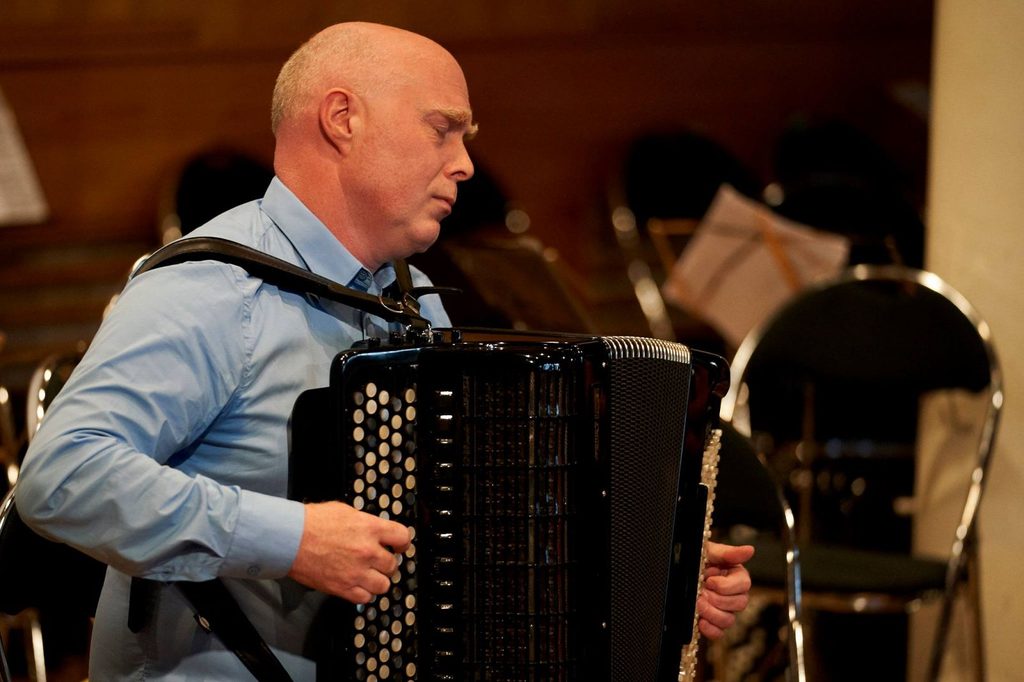
We have been talking about people who inspired successive generations of accordionists. But what inspired the young Geir Draugsvoll to pick up the accordion?
From a very early age, I was interested in music. As a three-year-old, I was already attending a music kindergarten, and I found the accordion particularly fascinating. When I was seven or eight years old, I heard an accordion orchestra from a local music school. I still remember it vividly. The orchestra was playing Moscow Nights, and I thought, “Oh my God.” All those buttons, that sound of twenty children sitting together and playing. I immediately asked my mother whether I could do that too. She said, “Of course.” And that is how my story began.
I also remember my very first accordion lesson. To provide some context – I come from the mountains, where there is never a shortage of snow. During that first lesson, I received my first instrument – a small Pigini accordion. On our way home, we were caught in a huge snowstorm. My father was unable to drive all the way home because he could not get the car up the hill. We had to leave the car behind and continue the rest of the journey on foot. I still remember the feeling of having to leave my new instrument in the car. It was not a pleasant experience.
Those were my beginnings – I heard an accordion orchestra and thought, “Wow.” And in a way, this brings us back to what we were talking about earlier. Creating a sense of community and togetherness is extremely important, especially for children. That is what inspires people. I think Angelo is doing a fantastic job here at the festival.
Staying with the subject of inspiration, I am reminded of a story told by Professor Teresa Adamowicz-Kaszuba. In 1967, Mogens Ellegaard came to Poznań at the invitation of the Poznań Philharmonic. He also gave a solo recital, during which he performed works by Lundquist, Schmidt, and Bentzon, among others. Professor Adamowicz-Kaszuba sat beside him on stage, turning pages for him, and also played for him during a public masterclass. As she later recalled, she was deeply impressed by the encounter – in a way that was difficult to put into words. Her contacts with Ellegaard became one of the most important inspirations that influenced her choice of professional path.
Those are exactly the kinds of moments that stay with you for the rest of your life. It also shows just how powerful an impression Mogens Ellegaard was able to make on people.
I also think that this is a very important lesson for everyone involved in music education today. They should constantly inspire their students and create opportunities for them to meet people who make them look up and think, “Wow.” If someone wants to reach a truly high level, they need role models like that from the very beginning of their journey.
When I was growing up, it was not only about the accordion – it was also about people. In my hometown, there were many individuals who were actively involved in music. Some of them became my first musical heroes, such as Jostein Stalheim. He was seven years older than me and a tremendous source of inspiration. I looked at him and thought, “Wow, you can do things like that?” When he later moved to Copenhagen, I thought to myself, “I would like to do that too.”
Equally important, in my opinion, is listening to great recordings and great masters. When, as a child, you hear outstanding musicians, you begin to ask yourself questions such as: “Can the accordion really sound like that? Is it really possible to do things like that? Could I become part of that world as well?”
If there is no summit to aim for, no artistic ideal that makes you stop and say, “This is something truly special,” then something is lost. If, as a child or a young person, you do not receive the kind of inspiration that Professor Kaszuba spoke about, then, in my opinion, something very important is missing. Mogens was certainly such an inspiring figure. Not only because of his abilities, but also because of his personality. He was an inspiration both to accordionists and to musicians from other disciplines. Among my parents’ generation in Denmark, it would have been difficult to find someone who did not know who Mogens Ellegaard was. If you were to go out into the street today and ask people to name a contemporary accordion master, very few would probably be able to give you a specific name.
I have the impression that it was easier in the past to influence and inspire others. That is something I find somewhat concerning when I think about future generations. I have the feeling that we no longer strive strongly enough to reach the highest level of our own potential.
Today, we have easy access to the internet, streaming platforms, and an enormous number of people we can admire. In the past, the world was much more closed, but I have the impression that this was precisely why a single encounter with an exceptional person could change someone’s life. Today, it is much more difficult to impress young people because they are surrounded by too many stimuli and have too many things competing for their attention.
I completely agree with that. There are simply too many stimuli. As a result, it is much harder for a single experience to truly stand out and become something life-changing. That is one aspect of it.
The other is that young people today see many examples of fame being achieved very easily. They see people becoming famous despite not really possessing any particular knowledge or skills. I am talking about influencers, Instagram personalities, and similar figures. Often, they do not have very much to offer, yet they are widely recognized. They are the people others read about and watch. If, on the other hand, someone plays the violin phenomenally well, you first have to find that person. You already need to have an interest in that field. And that is a problem.
Young people are beginning to believe that it is possible to achieve a high level without putting in the necessary work. But that is simply not true – you have to work. That is precisely why music is so important from an early age. Unlike a phone or a computer, an instrument gives you exactly what you put into it. It does not matter which instrument it is.
In the digital world, by contrast, you can press a button and instantly receive all sorts of things, as if you had earned them. The reality is that you have not. It is a false world and a false relationship between effort and results. In my opinion, that is dangerous for the next generation.
Let us hope that everything works out well, including for the future of the accordion. In fact, that is another reason why I feel I should focus more on passing on knowledge. Perhaps the time has come for me to start building the pyramid myself.
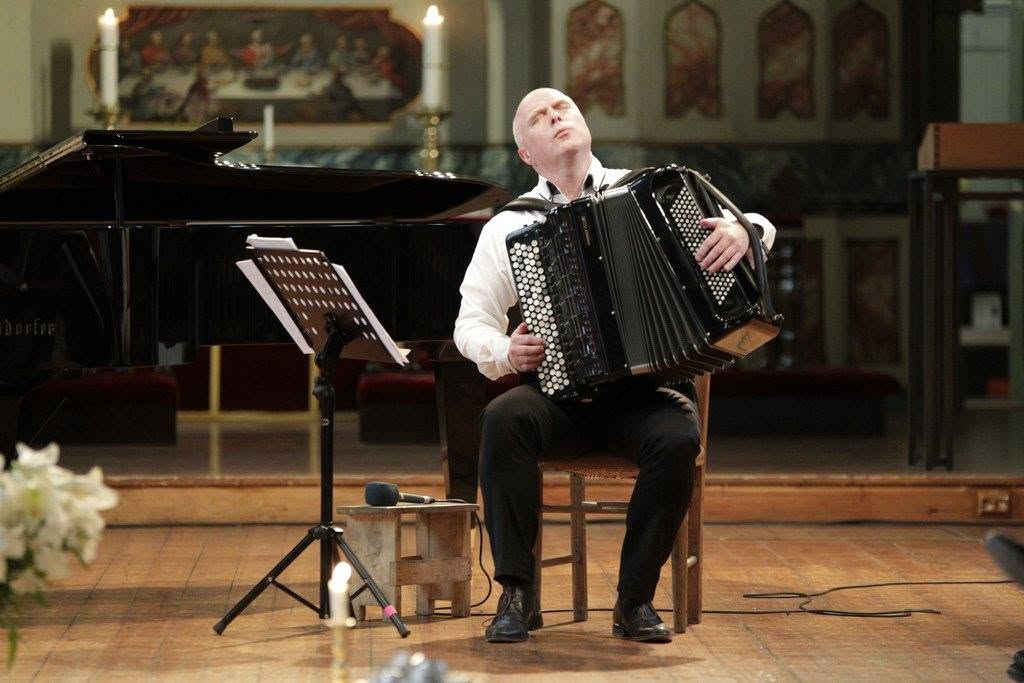
Today, we often see only the final result – another outstanding performance, recording, or artistic achievement. Much less often do we reflect on the journey that was necessary to reach that point. I would therefore like to ask about that journey. What was the price of your achievements? What did you have to sacrifice in order to reach the place where you are today?
To be honest, I do not feel that I had to sacrifice anything or pay any particular price. Of course, you have to put in a great deal of work, but I never saw that as a sacrifice. On the contrary, the work itself brings a sense of satisfaction and pride. I sometimes feel that this is something we are missing today.
Practising is not a sacrifice, and it is important to remember that. It is something you do because you want to master something. The very feeling of mastering a skill should provide more satisfaction than entertainment that offers only momentary excitement and laughter.
So I do not look back with the feeling that I missed out on anything. I have had a very active life, and I still live an intense life, full of different experiences. I have done many things, not only those connected with work, although that is, of course, what we are mainly talking about here.
It is difficult to pass this way of thinking on to the next generation, because I sometimes feel that young people understand it less and less. I occasionally tell my students, “When James and I were students, there were periods when we arrived at the academy at six o’clock in the morning. Later, we would go outside only briefly to get some fresh air. By the way, the weather in Copenhagen was terrible back then. We would walk for forty minutes and then practice for another four hours before noon.” I have students who probably do not even get out of bed before noon.
You have to be able to see the value in that way of life. Is it a sacrifice? I would not say so. Of course, when you are at the academy from early in the morning, you do not always have a place to practice later in the day because classes are taking place or all the practice rooms are occupied. As a result, you return to your work again in the evening. In practice, your entire day revolves around it. You go home only for dinner or a short rest. But, once again, that is not how I see it. What matters is the sense of satisfaction that comes from eventually mastering something.
Perhaps that is where the problem lies. Many people would like to master something before doing the work that is necessary to achieve it. I should add, however, that despite this tendency, I observe an overall rise in standards among both performers and teachers.
Today, I can very quickly identify the areas my students need to work on. When a problem arises, it is often enough to “turn a few of the right keys” to unlock new possibilities – provided, of course, that the student is willing to put in the effort. I do not want my students to have to discover everything on their own, as I sometimes had to. I am there to help them, not to make their lives more difficult.
Perhaps today’s reality is different from the one in which I grew up, but I would like to emphasize once again that I do not feel I sacrificed anything. It is not as though I look back and think, “I never went to the cinema during my student years.” That is true – I went very rarely. I simply lived the kind of life that made me who I am. I worked in a way that was consistent with the person I wanted to become. That is why I see it more as an effort that ultimately brought its own rewards, both personally and professionally.
I would like to add one more thing: I teach a lot, and I have exactly the same problem when it comes to convincing the next generation. There is simply no way to do it without work. You cannot simply imagine that you play well. No one else will think so either if you have not put in the necessary effort.
I can help. I can show which drawer is worth opening, what should be taken out of it, how something can be cleaned up, improved, and put back in its proper place so that the final result is better. But the fundamental work has to be done by each person individually.
And it seems to me that this is a challenge not only for accordionists, but for the entire next generation.
- Angelo Pignatelli, the organizer of the CAM Accordion Festival. ↩︎
- The photographs by Bodil Maroni Jensen are taken from the article “Hell und Dunkel for to akkordeoner – Sofia Gubaidulinas siste verk”, published on Musikkjournalistikk.no: https://www.musikkjournalistikk.no/hell-und-dunkel-for-to-akkordeoner-sofia-gubaidulinas-siste-verk/ [accessed: 15 September 2026]. ↩︎
Dodaj komentarz