
1 July 2026
Author: Mateusz Doniec
There are many great accordionists in the world, but many of them can seem quite similar on stage and in their artistic careers. Mario Stefano Pietrodarchi is different. It is hard to confuse him with anyone else – when he performs, but also when he talks about music, teaching, and his own artistic path. His career is based on great discipline, hard work, and consistency, but also on emotion, sound, energy, and a strong connection with the audience.
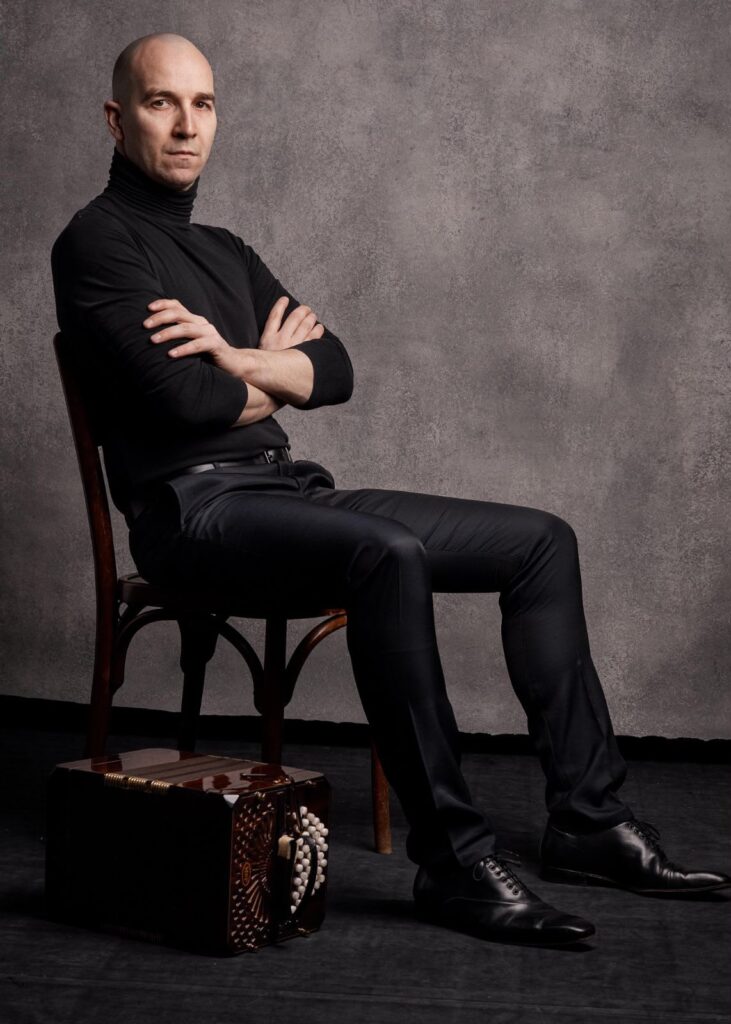
Mario Stefano Pietrodarchi was born on 26 December 1980 in Atessa. He started learning the accordion when he was nine years old, and later he also began playing the bandoneon. From 1993 to 2001, he studied at the Civica Scuola di Musica “F. Fenaroli” in Lanciano with C. Calista and C. Chiacchiaretta. In 2007, he graduated with honours from the Conservatorio di Musica Santa Cecilia in Rome. In the following years, he performed on many important stages and at many important events, including the Montreal Jazz Festival, the Roman Colosseum with Andrea Bocelli, Angela Gheorghiu and Andrea Griminelli, Bethlehem during the Concerto per la Vita e per la Pace, and the Arena di Verona during the celebrations of the 150th anniversary of the unification of Italy. He also worked with artists such as Erwin Schrott, Anna Netrebko, Riccardo Cocciante, Pino Daniele and Simona Molinari. In 2018, he recorded the album Tango Seasons for Sony Records with Andrés Gabetta and Cappella Gabetta. He has given concerts in many countries in Europe, North and South America, Asia and the Middle East, regularly presenting the accordion and the bandoneon in many different artistic contexts.
The opinions of other artists also show how strong his artistic personality is. Tonino Guerra wrote that, when he listened to Pietrodarchi’s concerts, he discovered the accordion again. Pippo Caruso noticed that he can move between different musical styles while keeping elegance, good taste, and strong emotion. Joseph Calleja, Luis Bacalov, Roberto Molinelli, Andrea Guerra, and Umberto Scipione spoke about him in a similar way. They pointed out not only his virtuosity, but also his special expression, poetic sound, and ability to create a strong connection with the audience.
I talked with Mario Stefano Pietrodarchi for more than two hours in the last days of June 2026, between his lessons with students.
Maestro, thank you for agreeing to give an interview for Akordeon.info. I am very glad we can have this conversation, although I must admit that it also has a symbolic meaning for me – it is taking place near the end of my teaching internship with you. I wanted to do this interview now, after several months of working together. I believe that, after getting to know your approach to music, teaching and the accordion better, I can now ask questions that would have been different at the beginning of my stay. My internship at the Conservatorio F.A. Bonporti in Trento/Riva del Garda has been made possible through the Erasmus+ programme. In Poland, many people think of Erasmus mainly as a programme for students. Not many people know that it is also open to graduates who want to develop their teaching skills. How do you see the value of this kind of exchange for young teachers and musicians?
When I started my first job at a music conservatory – it was in Vibo Valentia, in southern Italy – I quickly understood how important it was to build cooperation with other academies, institutes and conservatories around the world. The director of the conservatory in Vibo Valentia gave me space to develop these contacts. Over five years, we managed to build many relationships. Thanks to them, my students, but also other students from the conservatory, could go abroad and gain new experience.
The first important place my students went to was Germany – especially Hanover. There are also some Polish elements in this story. My student Adele Pirozzolo did a teaching internship at the Academy of Music in Poznań, and Giancarlo Palena went to Warsaw to study with Professor Klaudiusz Baran.
Now this exchange has worked the other way round – you came to me. You helped me a lot as a teacher in my work with students, but you also gained a lot of experience yourself. You had the chance to go to Casalecchio and play with an orchestra. You also took part in a masterclass that we organised in southern Italy. Your programme included many elements that are important for development. We did beautiful things together.
I think this kind of exchange is very important. I always see that when students come back from such experiences, something changes in them. They become much stronger and more independent. You could say that they start to speak another language – not only literally, but also musically and pedagogically. This is very important for a person, for a student, for a musician.
I believe that Erasmus is a programme that every student should have the chance to take part in. This kind of experience is very important because it helps you grow, learn more and look at your own work from a completely different perspective.
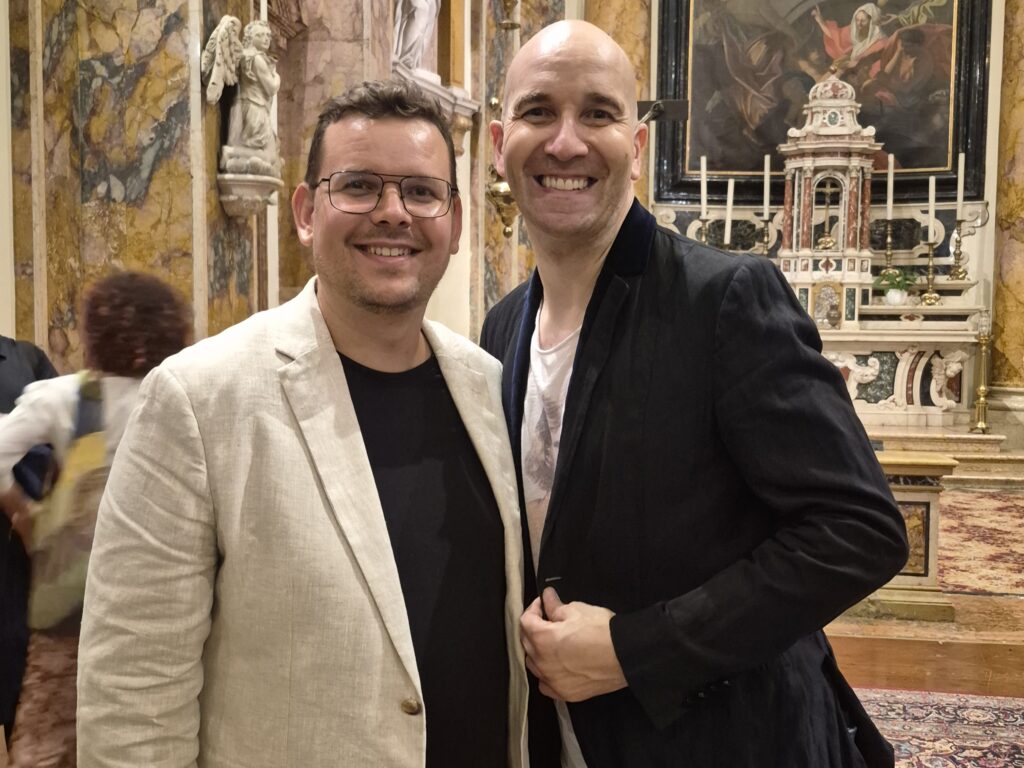
So we invite all Polish accordion students to Trento!
Absolutely. I would very much like to build a strong exchange and long-term cooperation with Polish accordionists. But it is not only about Polish musicians coming to Trento. I would also like my students to have the chance to go to Poland, which has become a very important and modern country – also in the accordion world.
I like Polish original accordion music very much. You have many excellent composers. I value the music of Bogdan Precz. I believe that some of his pieces are among the most beautiful works ever written for the accordion. What is especially important to me is that he wrote many excellent pieces for young musicians. Pieces such as 3-3-2 and Grafeld’s Impression are both very good teaching music and real artistic music. But Precz also wrote for more mature performers – for example the Sonata, Twelve in Four and Fantasia polacca. He is a very important composer for the accordion. I also like the music of Mikołaj Majkusiak very much.
Quite recently, the young Polish accordionist Michał Stochel won the Eurovision Young Musicians 2026 competition, performing the third movement of Concerto Classico by Mikołaj Majkusiak.
Congratulations, Michał! It was a very good choice of piece.
Maestro, music education in Italy is organised a little differently than in Poland. At the conservatory, you teach not only university-level students, but also younger pupils in pre-academic courses. Why is it important for you to work with musicians at this early stage of their development?
I think this work is extremely valuable. If we want to have very good students in the future, we have to invest in young pupils at an earlier stage. With a child, many things can be built naturally – the way of working, good habits, how they work with the instrument, and their relationship with music and the stage.
When someone comes to the conservatory as an older student, they often already have a fixed way of playing. Then change can be very difficult, because you have to rebuild something that has become automatic over the years. That is why I believe the most important process starts much earlier – when the pupil is 8, 9 or 10 years old. At that age, you can guide them step by step, set new goals, prepare them for their first competitions, their first performances and a more focused way of working. Thanks to this, when such a young musician is 17 or 18, they can already be very mature. They have not only many years of study behind them, but also a whole process of artistic and personal development. They are more independent, understand the instrument better and know how to work.
Of course, there are exceptional cases. In Calabria, I worked with a student, Tommaso Arena, who was already 20 years old. We actually had to start almost from the beginning, with a completely different way of working with the instrument. For three years, he practised more than eight hours a day, and later he won category D in Castelfidardo. That was something extraordinary. But stories like this are very rare, because they require enormous energy, passion and readiness for a complete change.
That is why, for me, working with young pupils is one of the most important parts of music education. It is the moment when you can build the foundation for everything that will come later.
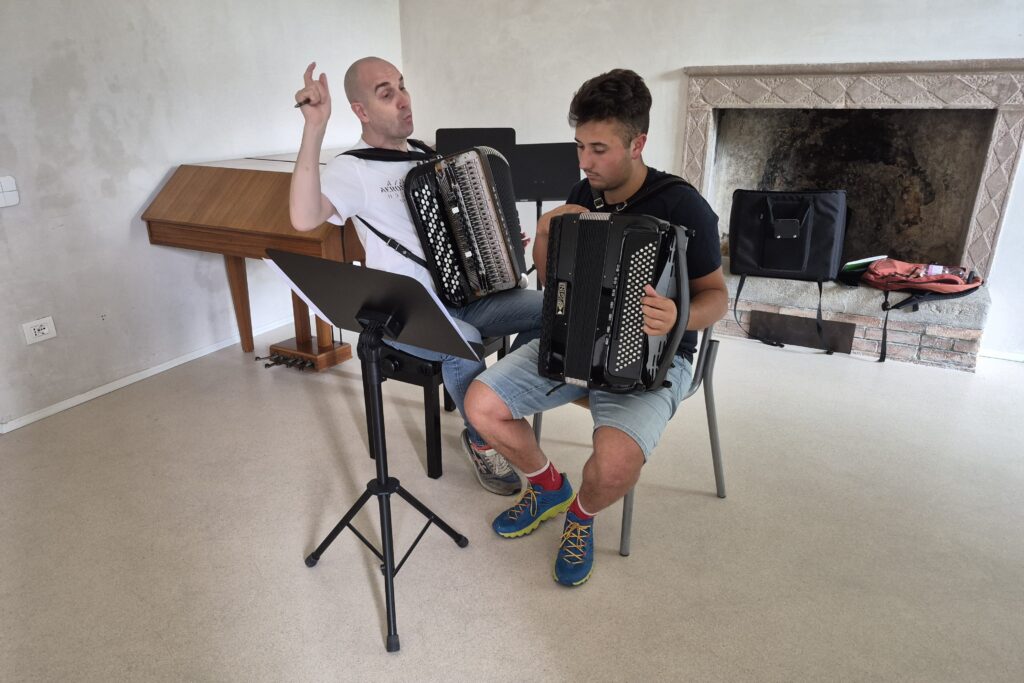
While observing your work with students, I especially noticed that you give each of them a similar level of attention and commitment – both the most talented students and those who develop more slowly or have less natural ability. Where does this approach come from?
I try to give a lot of attention to everyone, because I really enjoy teaching – the relationship with young people, the trust that grows between teacher and student, and the chance to pass on my own idea of the accordion and music. I also believe that even if someone does not become an outstanding performer, they may become a very good teacher in the future.
Maybe in a few years, or in ten or fifteen years, this person will start teaching in their own town, in their own community. Maybe one day a student will come to me who had their first lessons with one of my current students. That is why it is important that even those who do not have the greatest natural ability receive good knowledge, good foundations and the right way of working.
If we want the accordion to develop, we have to invest time not only in those who seem from the beginning to have the potential to become excellent soloists. Sometimes a person who does not have great stage talent may do very important teaching work in the future – especially in a small town, in a local school, in a place where the development of many future students may depend on one teacher. That is why I believe it is worth working carefully with every student. This kind of work may bring results that are not visible at the beginning.
So you are trying to create something like a network around you – an environment where knowledge, experience and good teaching models can be passed on and help young students develop in the right way?
Yes, I think this is very important. Of course, you cannot influence everything and everyone, but you can take care of the quality of education in your own environment. That is why I try to help people who are close to me, who want to learn, and who may pass this knowledge on in the future.
The point is that my students – including those whose future will not necessarily be as soloists – should have good teaching foundations. If they start teaching in five or six years, they will be able to pass on clear principles to their own students: how to use the right-hand manual, how to work with the bellows, how to think about sound, phrasing and music. It may not always be the highest level, but it will be a good level, based on what I have taught them.
Of course, at some point it would be easier to work only with the best students. The best situation is to have former students around you who prepare younger pupils well, and then these young musicians come to me for the next stage of their education. We managed to create this kind of process in Calabria. Luca Colantonio, my former student, did excellent work with young pupils, so later I could work with people who already had good foundations.
Here in Trento, this kind of system may only be starting now. Students such as Marco, Jacopo and Martin are beginning to teach, and perhaps in two or three years their students will come to the conservatory already well prepared.
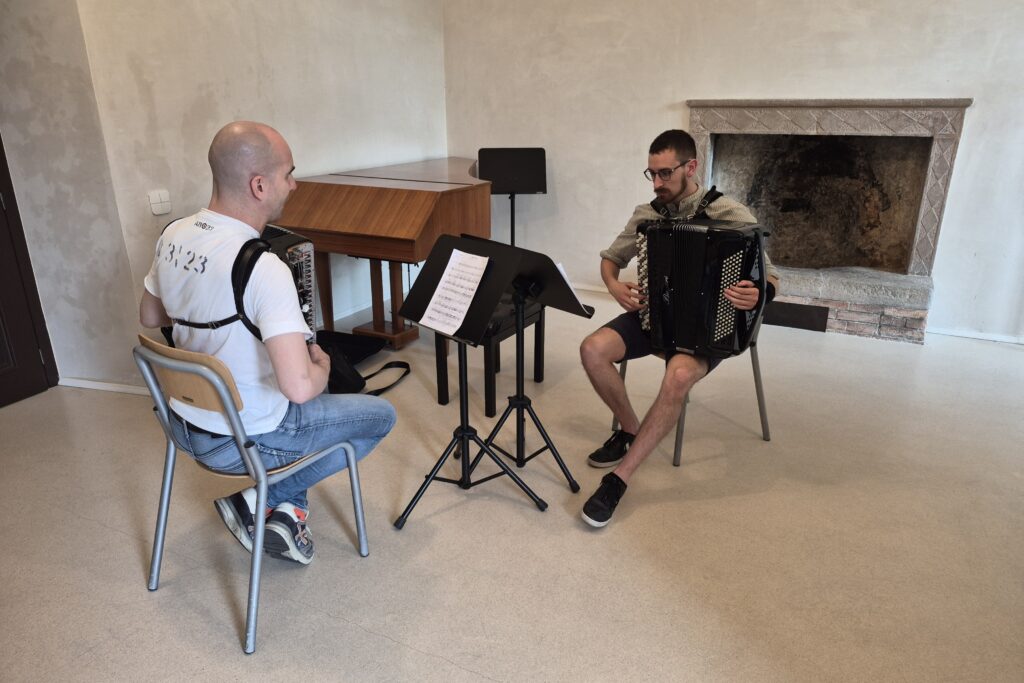
Do masterclasses help to build a consistent school of playing, or can they sometimes disturb the regular work with a student?
I always tell my students that after a masterclass, the first thing is to understand its meaning. A masterclass is not an absolute truth that you should immediately follow. It is a meeting with a particular person, with their way of thinking, their experience and their sensitivity.
If a student meets many teachers and, after every lesson, immediately starts to follow all their comments, it is very easy to get lost. One teacher will say: play it this way. Another will say the opposite. A third one will suggest a different solution. That is why you have to listen, try and understand, but you cannot completely change your way of playing after every masterclass.
None of us is perfect. None of us knows the one and only truth. That is why the most important thing is to understand what a particular teacher is looking for, what they are suggesting and why. Then everything has to come back to the centre, which is the student. You can take something from one teacher, something from another, something from a third one, but you have to process it yourself and find a solution that is right for your own way.
I remember a situation when Mika Väyrynen came to my conservatory. One of my students saw how Mika adjusted his accordion straps, and the next day he came to play in exactly the same setup. I told him: you can try it, because it is worth trying different things, but what is best for Mika does not have to be best for you.
That is why I believe that masterclasses are very important, but their role has to be understood properly. They give ideas, inspiration and a new point of view. But they do not replace a long process of work. A student needs not only information about how to play, but also knowledge of how to prepare for a competition, how to work every day at home, how to control themselves, how to guide their own development and how to reach concrete goals.
You cannot fully help someone with just one masterclass. For me, the most important thing is to guide a student over a longer period of time – from the beginning, through the next stages of their development. This is the only way to build solid foundations. Later, I tell my students: go everywhere, work with different teachers, listen to everyone, try different things. This is very important. But there has to be a centre you can return to, and a process that puts all these experiences in order.
Maestro, while reading Adele Pirozzolo’s diploma thesis about your school, I noticed that almost all the people she interviewed mentioned how much importance you give to sound quality and the way the sound is produced. After our lessons, I can only confirm this. I wonder where this way of working came from. When did you realise that working on sound is one of the most important parts of playing the accordion?
When I started working with musicians who played other instruments, I understood how important sound quality is. In the accordion world, people are still very often impressed when someone plays loudly and fast. This is quite typical: the faster you play, the better accordionist you seem to be. For me, technique is of course important, but technical skill alone is not enough. First you have to know what kind of sound you are looking for, how to build it and how to give it meaning. A real musician can be recognised by their sound.
I realised this very strongly through working with wonderful instrumentalists – for example with the German violinist of Georgian origin Lisa Batiashvili, or with one of the best clarinettists in the world, Alessandro Carbonare. These are musicians who take care of every detail of sound. Listening to them and playing with them, I felt more and more clearly that these details of sound are one of the most important things in music.
That is why I believe that accordionists should not listen only to other accordionists. It is very important to get to know the way string players, wind players, singers and jazz musicians think. One of the most important musicians for me was the American guitarist Pat Metheny. I strongly recommend everyone to try listening to him. He created his own sound, immediately recognisable, which had a huge influence on contemporary music.
There is one more important point. Many schools still look at the accordion through the piano, as if we should learn to play only with piano methods. I do not agree with this. I believe that the only thing that really connects the accordion with the piano is the keyboard. In terms of how sound is created, the accordion is much closer to instruments such as the clarinet, the saxophone, the oboe, and even the human voice. These are the schools we should take more inspiration from.
For me, one of the greatest arts is to make a musician recognisable by sound alone. Of course, this is easiest with singers: when you hear the voice of Luciano Pavarotti, you know it is Pavarotti; when you hear Anna Netrebko, you immediately recognise her voice. I think this should be the goal of every musician – to create their own sound, their own way of playing, their own sound identity.

One of the important moments in your career was winning the Trophée Mondial in 2001 in Lorient, France – one of the most important accordion competitions in the world. How did you reach that success?
That victory would not have been possible without the Trophée Mondial in 2000 in Alcobaça, Portugal. I came second there, but something much more important happened. During that competition, I understood that something special could happen in my life. I felt that I could compete with the best accordionists in the world and that I could really become a good musician.
My way to this awareness was not simple. In my early years, I mainly played folk music, the kind of music that was popular in restaurants. Something began to change in 1994, when I met a wonderful teacher, changed my instrument and started playing with a free-bass system.
My first experience with the Trophée Mondial was in 1998, when the competition took place in Recoaro, Italy. I competed in the junior category and came 9th. I was a little sad, because everyone goes to such a competition hoping to play as well as they can, and at that time not everything was perfect on my side yet.
Two years later, I returned to the Trophée Mondial, this time in Portugal. In the first round, I was second behind Dragan Vasiljević, who later won the whole competition and at that time was one of the best accordionists. In the second round, I was first, and in the third round I was second again. I did not stand on the top step of the podium, but I have beautiful memories from Alcobaça. Every time I go back there, I feel something special, because it was there that music started to become my life.
Throughout the whole year between the competition in Alcobaça and the competition in Lorient, I kept thinking that all the prizewinners from Portugal would come to France to win. I knew that everyone would work very hard, practise many hours a day and give everything they had.
At that time, a slightly crazy idea came into my head. I thought that if I wanted to gain an advantage, I had to work when others were probably resting: at Christmas, at Easter, on my birthday, during holidays. Every hour of practice on those days could build my advantage. That is why I practised every day – really every day – for at least ten hours. Ten hours at Christmas, ten hours at Easter, ten hours on my birthday. Absolutely every day. I was motivated by the wish to make a beautiful dream come true – to win an international competition. And I won. I was very happy then.
But we have to remember that competitions are important, but they are not the most important thing. I have met many musicians who did not win major competitions, but later created something special. I have also met musicians who won the most important competitions in the world, sometimes even several of them, but later could not build their own way and continue working with music.
That is why I think competitions are important mainly for developing your mindset. For a long time, you have to have a goal, keep it inside you and work every day to get closer to it. The result is not the most important thing. What matters most is the work you do while trying to reach your goal.
I still feel the results of that whole year of work between the two competitions. At that time, I built something very strong inside myself. Thanks to that, I know that I can practise ten hours a day, travel with almost no sleep, and go beyond limits that many people think cannot be crossed. A large part of my personality was formed then.
Of course, this is the bright side of the story. Such a huge effort also has its consequences. I suffered a lot, and I also had some health problems. Still, I believe it was worth it. It is worth believing in yourself, setting goals and working to achieve them.
I understand that after your victory in Lorient, the phone immediately started ringing with concert offers?
Actually, not really. When you win such an important competition, you wait and think that maybe something will happen the next day. That your life will change immediately, that everyone will start calling and inviting you to play concerts. But reality can be very different, and that can be hard. At that time, the Trophée Mondial had no prize money. Winning did not guarantee any concerts, any contracts, or anything concrete. When I woke up the next day, nothing had happened.
At a moment like that, you have to understand that nothing will happen without your own work and commitment. This is true not only for competition winners, but for all young accordionists. When you finish your studies, you may feel that your diploma should change something: that now you will become a good teacher or a great performer. But what many people see as the end of the road is really only the beginning. From that moment on, you have to start creating something. After your studies, you are ready to work and you understand how to do it, but the work will not come to you. You have to build your own way.
I experienced this too. At the beginning, I had to convince people to invite me, just so I could play even one concert. I played many concerts for free – only to start performing, meet people, play with other musicians and appear at a good festival. It was a big investment in myself, and I always encourage my students to think about it in the same way.
If you do not give something from yourself, it is hard to expect life to give something back to you. Of course, you have to practise a lot and work a lot, but you also have to go out to people with your work. You have to create a small office in your head: write to people, send audio and video recordings, promote yourself and show your work. Only when people start to recognise you and connect you with your work does everything slowly become easier. What I invested at the beginning of my career is bringing results now. I have a beautiful life, and the interesting thing is that today I no longer really have to deal with promotion.
So today the situation is the opposite: the people you once wrote to, trying to convince them to invite you for a concert, now write to you themselves and try to convince you to perform for them.
Basically, yes. The interesting thing is that sometimes I receive invitations from people who already invited me at the beginning of my career. In these situations, it is very difficult for me to say no, because I believe you have to remember the people who helped you when you were just starting out. It is very important not to forget the people who gave you your first chance to play.
For example, in Napoli there is a small theatre – Teatro Ferrari. The director of the theatre is Salvatore Ferrari. At the beginning of my career, when I was still very young, he invited me to play a concert there. And when you are nobody yet, the organiser has to do a lot of work. He has to convince people to come, to buy a ticket. Salvatore had a lot of work with organising my concert. I remember that last year Salvatore invited me again. He said: “Listen, I would like you to perform here, but I know that now you are at a completely different point in your life. We do not have enough money to pay you what you normally receive for a concert.” I answered him: “I will never forget that at the beginning of my career you trusted me and gave me the chance to perform. I will come. Pay the string quintet that will play with me, but I do not want a fee. This will be a small gift from me to you – for investing in me when I was still nobody.”
Sometimes it is very difficult to say no. The world of music also needs places like this – small theatres, local initiatives, projects that may not have much money, but give people contact with something beautiful. Today I perform in large projects, I play on important stages, I work for example with Balletto di Roma, but when I can do something for free, for music, for people, for the simple beauty of the meeting, I try to do it. I feel that life has given me a lot. Of course, I have worked a lot, studied a lot and sacrificed a lot, but life has been, and still is, good to me. So if I can give even a little something back to the world, to music and to people, I try to do it. I think this is very important.
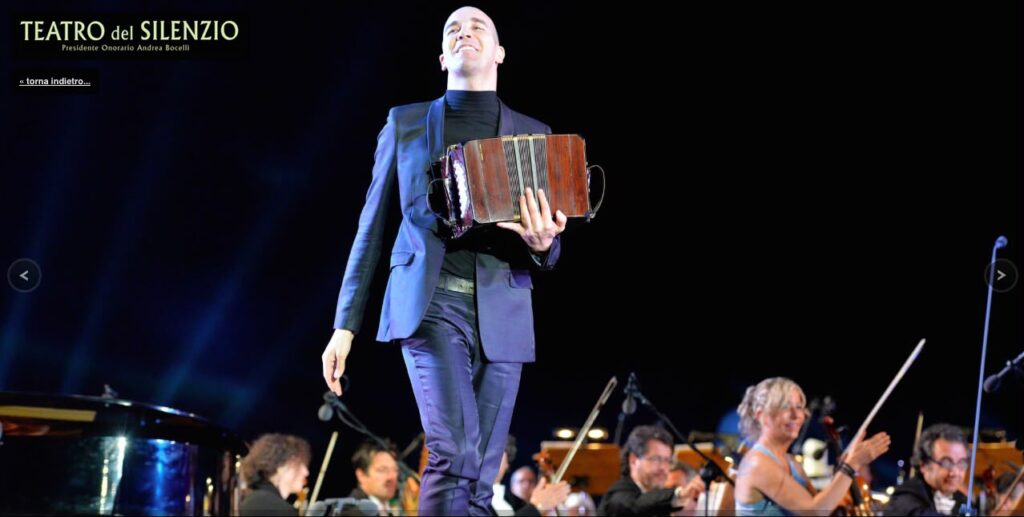
Maestro, you have created your own artistic way, and tango has taken a special place in your life. Why did this music become so important to you?
On my way, I met many musicians and artists who gave me strong emotions. But I think Piazzolla gave me the most – maybe together with Pat Metheny. I remember that when I started listening to this music, I immediately wanted to understand how to play it. I wanted to understand the way Astor played, how he built tension, and how he gave emotions to the audience. That was the first reason for my interest.
But one important thing has to be said: I do not exactly like tango. “Tango” is a big word. Piazzolla, of course, comes from tango – he was born in Buenos Aires, played the bandoneon, and used instruments and idioms connected with that tradition. But for me, his music is not simply tango. It is the music of Astor Piazzolla – a separate language, a separate world, the music of one of the great composers of the 20th century.
If we talk about traditional tango, I have to be honest: I do not know it very well, and it is not especially close to me. I have sometimes been to milongas, listened to this music, watched people dancing tango, and I felt that this was not my world. That is why, when someone says to me after a concert: “When you play Piazzolla, I want to dance”, I have a problem with that. For me, this music cannot be treated as ordinary dance music. Of course, Piazzolla’s music can be danced to, but in a completely different sense – through conscious choreography, as Balletto di Roma does, for example. These are contemporary dancers who create movement inside this music, inside its style, rhythm and tension. Then dance becomes part of Piazzolla’s world. But simply dancing to this music, as at a milonga, is not something I feel.
So I would say this: tango became important to me mainly because of Piazzolla. It was not the genre in general that shaped my artistic world, but Astor’s music – its sound, energy, drama, emotion and extraordinary way of telling a story.
Who was Astor Piazzolla for you?
People sometimes say that Piazzolla changed tango. Of course this is true, but for me this is too small a way to describe him. Piazzolla was first of all a composer. He studied with Nadia Boulanger in Paris and wrote music for symphony orchestra, chamber ensembles, bandoneon and many different groups. He was not only someone who changed tango. Piazzolla created his own musical language. For me, he is a composer of the same level as the great composers of the 20th century – you can think of him next to names such as Stravinsky. His music has extraordinary harmony, rhythm, tension, emotion and a sound that is immediately recognisable.
At the beginning, I actually wanted to copy his way of playing. This music was so strong for me that I wanted to give the audience emotions similar to the ones Piazzolla gave. I wanted to understand his sound, his phrasing, his energy and the way he carried the music.
And how did you discover Piazzolla’s music? I ask because Astor Piazzolla died in 1992, when you were still very young.
I was very lucky. In my small town in central Italy, Atessa, there was a young man who was born in Argentina, in Buenos Aires. It was the beginning of the 2000s – 2001, maybe 2002. There was no Spotify, no Apple Music, no YouTube, and no easy access to recordings like we have today. I remember that he invited me to his home and showed me all the Piazzolla CDs he had brought from Argentina. There were more than a hundred of them. For me, it was like discovering a huge library, a completely new world. I asked him to lend them to me, and I started copying everything onto my computer. From that moment on, I listened to this music day and night. I think that was my most important lesson in Piazzolla’s music. I had access to a huge part of his recordings, so I could listen to everything, compare, go back to details, and try to understand his way of playing, phrasing and building emotion. It was an extraordinary experience for me.
It is also worth knowing that after Piazzolla’s death, a real Piazzollamania began in Italy. Many musicians started playing his works, audiences wanted to hear them, and ensembles inspired by his groups began to appear. Piazzolla also had strong connections with Italy – he spent a lot of time here and worked with many Italian artists, including Tullio De Piscopo and Milva. Also in my region, especially around Pescara, there were many musicians who started playing Piazzolla at that time.
Until I was about 22, however, I mainly played the usual repertoire for a young accordionist: Russian music, transcriptions and contemporary pieces. The real change came around 2003, when the Orchestra Internazionale d’Italia contacted me. They invited me on a tour to China and asked me to prepare Piazzolla’s music. That was when I really started playing it professionally. More than twenty years have passed since then, and I still work with this music and play it very often. The interesting thing is that I like it more every day. This is the beauty of Piazzolla – each time, you can discover something new in his music: a detail, an emotion, a tension, a colour that you had not noticed before.
Today, alongside Piazzolla’s music, more and more new works by Italian composers are appearing in your repertoire.
Many Italian composers are writing new music for me – including Roberto Minelli, Roberto Di Marino, Andrea Scarpone and Luca Salvadori. This is very important to me, because I do not want only to imitate Piazzolla. His music remains a starting point, but it also leads me to search for my own sound.
I am interested in music with an Italian character. A repertoire connected with my country, my background and my way of understanding sound. The bandoneon, although it is associated with Argentina and tango, is a German instrument. The accordion, on the other hand, is very strongly connected with Italy. That is why it is natural for me to look for an Italian way of speaking through my instrument – a sound that comes from my world, my culture and my experience. This is difficult to explain, but it is about a certain kind of musical identity. Piazzolla created a language that is absolutely recognisable, connected with his story, the place he came from, and the instrument he spoke through. I do not want to do something “bigger” than Piazzolla, because I think that is impossible. I am more interested in something else – music that of course grows out of the experience of Piazzolla, but has a different colour, a different origin and a different energy.
A few days ago, together with the guitarist Luca Lucini, I played Roberto Di Marino’s Double Concerto for bandoneon, guitar and string orchestra at the Berlin Philharmonie. It was a very beautiful experience for me, because Roberto comes from Trentino, from my closest environment. He wrote a wonderful concerto which, in a certain sense, starts from Piazzolla, but already speaks its own language – with a different character, a different expression and a different way of thinking about the accordion. This is exactly the kind of repertoire where I now see a very important space: music that remembers Piazzolla, but does not stop at his language. Music that carries my background, my country, my sound and my way of thinking about the accordion.
Today, your way of life is very different from the usual life of a musician. You perform, teach at the conservatory, travel all over the world and take part in many different projects. Is there still room in all this for private life?
I do not hide the fact that I am very busy. In May 2025, I played fourteen concerts – not only in Italy, but also in places such as Madeira, Warsaw and Belgrade. A few days ago, I came back from Berlin. I try to come to the conservatory every week to follow my students’ progress. I think they really need me to guide them and be present in their work.
You cannot have everything in life. When you give two hundred percent to your work, you have to give up something in your private life. Recently, for example, I have noticed that it is very difficult for me to find time to eat a meal calmly – to sit down like a normal person for lunch or dinner. Very often I eat in a hurry, while travelling, between rehearsals, concerts and lessons.
I work from morning to evening, without many breaks and without much time for normal life, meetings or quiet rest. Sometimes this way of life is really extreme. I played in Madeira – a small island near Africa – and the next day I was already performing in Warsaw. Each of these concerts required full focus and concentration, and this is not easy when you do not have enough sleep, normal food, time to rest or a basic daily rhythm.
I always try to go on stage ready, focused and concentrated. I believe that this way of life requires very strong mental preparation. Not everyone can handle this pace. A few years ago, someone tried to travel with me and stay close to this rhythm of work. After two days, he could not function anymore. When you travel all the time, do not sleep at night, are in a different place every day, first have a rehearsal, then a concert, and then the whole process starts again, your body is under enormous pressure. You have to build the strength to live this way. What helps me a lot is the mindset and resistance I built while preparing for the Trophée Mondial.
From the beginning, I tell my students that the life of a musician is similar to the life of an athlete. If you put your body and mind under such great effort, you have to try to take care of yourself as well as you can. You have to avoid smoking and drinking alcohol, and use every chance to recover. For example, I like travelling by bus or by train, because then I can rest a little and relax. I think I will not be able to live this way forever. But at this moment, I am happy with the way I live. My life is not easy, but since I was young, this is the life I dreamed of.
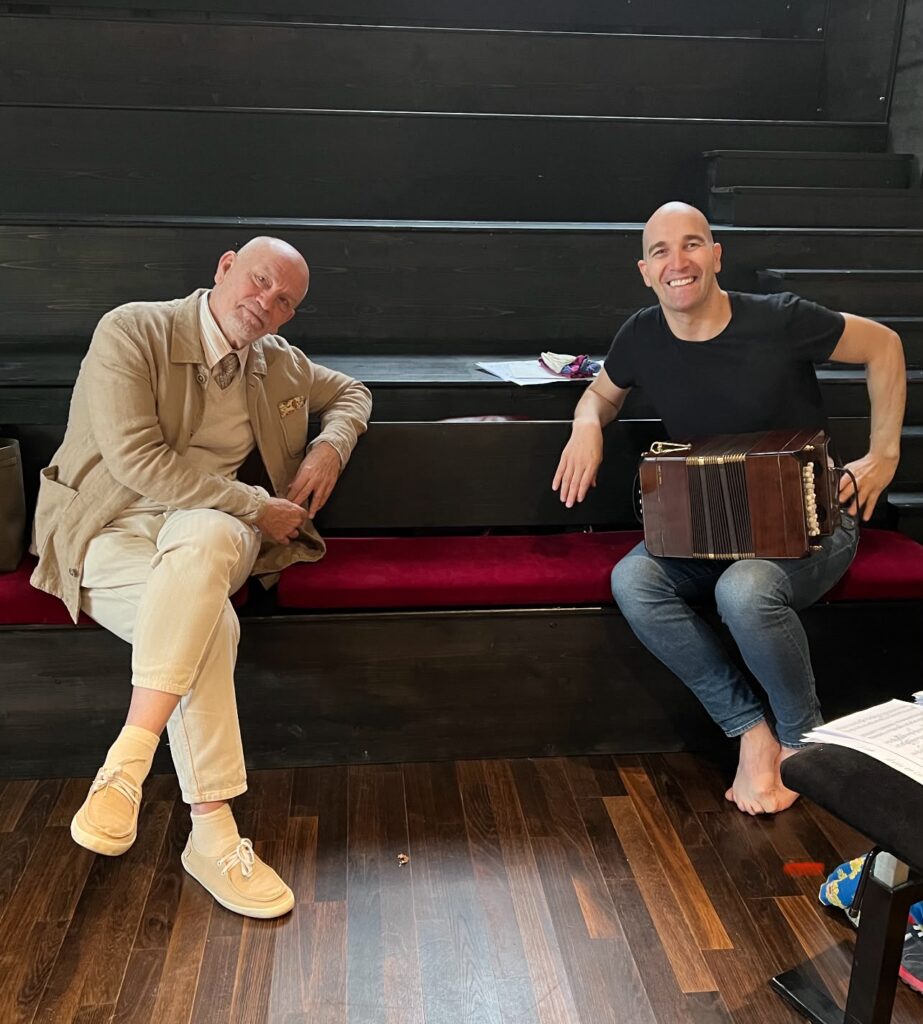
With this kind of life, many unusual situations must have happened – while travelling, on stage, or backstage. What do you remember most?
I have many stories like that. One that comes to mind is a New Year’s concert in China on 1 January 2020, just before the pandemic completely changed concert life around the world. Then came the time of COVID, which was very difficult for me, because I have always had a strong need to travel. It is very hard for me to stay in one place for many days. I like discovering something new every day, playing, meeting people and being on the move. During the pandemic, I was teaching in Calabria. We had lessons on Zoom, Skype and other platforms. I remember that for some students it was a very good time. They stayed at home, had a lot of time to practise and really developed. But there were also students who suffered a lot, because they needed contact, conversation, the presence of a teacher and working together. Not everyone can function well when they are closed alone at home.
When conservatories started to open again at the beginning of 2021, I went back to Calabria. At that time, I was still playing concerts, mainly streamed concerts. I was invited to different places, so regular COVID-19 testing became part of my professional life and my travelling life. I think I took more than 100 tests during that whole period. I was in Malta, for example, where I recorded a concert. Before leaving and after coming back, I had to have negative test results. Everything seemed under control. After returning to Italy, I was still at the conservatory, and then I went to my family home in Abruzzo. After a few days, it turned out that I was infected. Some students were positive too, and later my family also became ill. It was one of the most difficult moments of my life, because my father had a very serious form of the illness. He was taken to a COVID hospital. I suffered a lot at that time. I felt that because of my need to travel, play and continue normal life, I had created a huge problem for one of the most important people in my life. It was very difficult for me mentally. Fortunately, my father’s condition started to improve. Life really spared me then, because if something worse had happened, I do not know if I would have been able to return to normal life.
That is why I often say that I feel life has given me a lot. Of course, as I said earlier, I have worked a lot and sacrificed a lot, but in many moments I was also very lucky. So when I can do something for others – for people who suffer, who need something, or simply for those to whom music can bring joy – I try to do it. I feel that I should give back to the world at least part of what I have received.
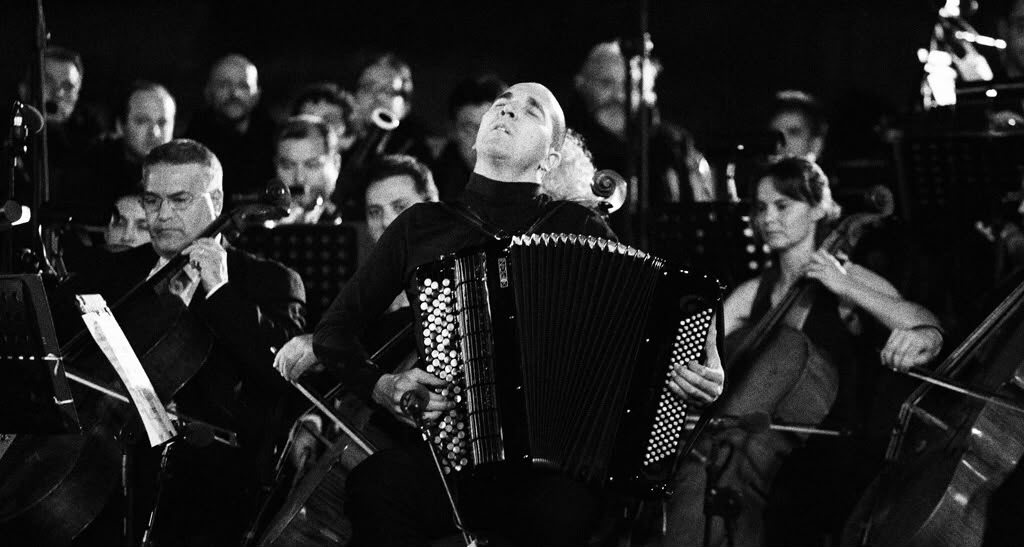
You are an accordionist with very strong stage expression – both in the way you use your body and in your facial expression. I must admit that I sometimes hear the opinion that such strong expression can distract from the music. Where does this way of being on stage come from for you, and how do you see it yourself?
When I watch a recording after a concert, sometimes I do not like the way I move. I see my body, my facial expression, my legs, all this movement, and sometimes I think that maybe there is too much of it.
After the concert in Berlin, a woman asked me a very similar question. She said it was beautiful that the instrument seemed to be connected with my body, but she also asked why I work so much with my legs – why they keep going up and down, why the body reacts like that. I told her that during a concert I really do not think about it. It is something that happens naturally, together with the music. When I am on stage, I try to play as well as I can, to focus on the sound, the phrase and the emotion. I do not think then about what my body is doing.
Sometimes, when I am looking for a certain sound, it is easier for me to find it through this kind of movement. It is not about an outside effect or a show. The body helps me reach a certain kind of tension, energy, breath and sound. If I stand completely still, sometimes it is harder for me to find the same kind of expression. That is why I think it is simply part of me. Movement helps me create something important for the sound, expression and music, and it would be difficult for me to give it up completely. Of course, I understand that for someone watching from the outside it may be too much. If it bothers someone, I can only suggest closing their eyes and trying to listen to the music itself. The most important thing should be the result: whether the music moves you, whether you like the sound, the interpretation and the emotion. The movement of the body is only part of the process that leads to that result.
Can this kind of expression be learned, or do you think it is something you simply have to be born with?
I think you can work on expression to some extent, but you have to be very careful about what you mean by that. The role of the teacher is, above all, to give the student the possibility to use the instrument fully. If they need to play staccato, they have to know how to do it. If they need piano or fortissimo, they have to be able to achieve it. If they are looking for a certain kind of sound, they should know the tools that will help them produce it. It is a little like painting. A teacher can give the student a palette of colours and show them how to use it. They can teach them technique, work with the bellows, articulation and how to build sound. But later, the student has to use these tools through their own musicality.
I think musicality is something very personal. You can develop it, you can organise it, you can help the student, but it is very difficult to “put” music into another person. I do not think it is a good solution to teach a student to play one hundred percent like the teacher – with the same phrasing, the same colour, the same bellows, the same registers and the same expression. My task is to give them tools, and then they have to start using them in their own way. If, for example, we are working on Scarlatti, the point is not for the student to copy my Scarlatti. It is very good if they play it differently from me, as long as the performance makes musical sense.
I do not believe in teaching expression through outside gestures: how to use your face, how to look at the audience, how to make a certain movement to show musicality. For me, this is very dangerous. Then you are not educating a person, but producing a robot who repeats the teacher’s behaviour. Sometimes in the accordion world, something appears that starts to look like a circus – many gestures, many faces, a lot of stage effect, but without any real musical need. I really do not like that. Expression has to come from the music, from the sound, from the performer’s inner need. If it is only an outside show, it becomes empty.
That is why I believe you can teach means of expression, you can teach control of the instrument, and you can help the student understand music better. But real expression has to come from the student. It should not be a copy of the teacher or a stage decoration.
When I speak with artists from abroad, I like to ask one question that often leads to interesting answers. When you hear the word “Poland”, what is the first thing that comes to your mind?
I associate Poland with a very high musical level. I have worked there a lot, and from my first visit I felt that I was meeting an extraordinary quality.
One of the most important experiences for me was working with Agnieszka Duczmal and the Amadeus Chamber Orchestra of Polish Radio. I remember the level of that orchestra, the quality of the musicians, the way they worked on sound and the extraordinary concentration of the whole ensemble. The rehearsals were very intense, and every detail was treated with great care.
Later, I performed in Poland many times – with different orchestras, in theatres and concert halls. I played, among other places, in Katowice, in the NOSPR Chamber Hall, during a concert with Cappella Gabetta and Andrés Gabetta. That was also a very beautiful experience.
So when I think of Poland, the first things that come back to me are Agnieszka Duczmal, the Amadeus Orchestra, the quality of work, the beauty of the sound and the intensity of the rehearsals. That is why I am always very happy to come back when I receive an invitation, because I know that something interesting is waiting for me there.
Poznań is also very important to me. It is a beautiful city where I spent unforgettable days, among others during the Wieniawski Competition. That experience really taught me a lot. Because I was the artistic director of the competition in Castelfidardo, I also looked at the Wieniawski Competition from the point of view of someone responsible for organising a similar event. In Poznań, I saw a way of thinking about a competition that I really liked. There, the competition is a musical event. The audience comes to listen to the participants as if they were coming to a concert. This is very important, because in many competitions, especially accordion competitions, the situation is different. Sometimes a participant plays in the highest category, and there are more jury members than audience members in front of him. For me, this is not a good situation. If a competition is meant to choose the best young musician, you have to give him a real space. It is not enough to put him in front of a jury. You have to show him to the audience, create a concert situation for him, and treat his performance as an event. This is exactly what I saw during the Wieniawski Competition. I also think that in competitions it is sometimes worth placing the emphasis differently. Maybe less should be invested in extra concerts, and more in the participants themselves – especially in the best ones, who have worked for many years to reach such a level. A competition should not only give a prize, but also help them take the next step in their musical life.
Geir Draugsvoll told me in an interview that people need impulses to develop – experiences or meetings that make them want to practise even more and try to become better. How was it for you, Maestro? Do you remember moments like that, which became especially important impulses for you?
There were many impulses like that. I think the whole development of a musician is made of such moments – meetings, experiences, courses, and people who give you new energy and motivation to work.
I remember a situation from 1999. Maybe this will sound a little stupid, but I was very young then and I really wanted to meet girls – also girls who played, were interested in music, travelled and had a similar passion. That was when I met an accordionist from Croatia. At that time, the Croatian accordion school was very strong. Outstanding teachers and performers were invited there, including Yuri Shishkin. This girl was studying with him and told me: “You have to meet him, he is incredible.” Thanks to that, I went to Frankfurt, where I met Yuri Shishkin for the first time. It was a very important experience for me. When I heard him and saw his way of working, I felt huge motivation. In a certain sense, my life changed then.
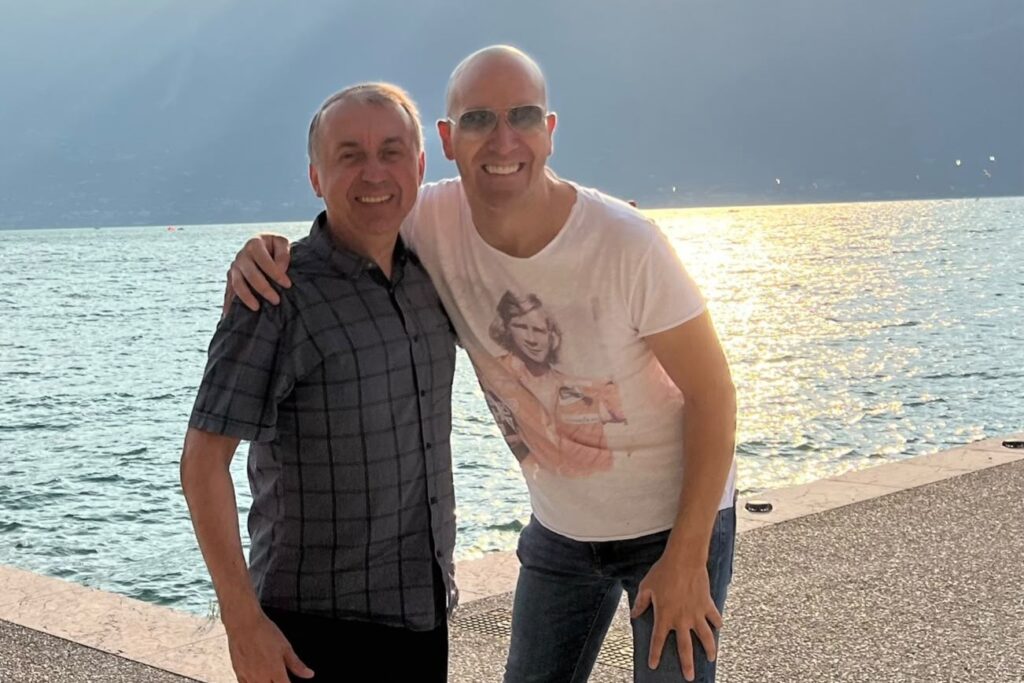
Later, there were many other teachers and musicians who gave me a similar impulse – more energy, strength, speed in my development and the wish to work better and better. Motivation is absolutely necessary for a musician. It is a kind of food that helps you grow, move forward and follow your dream.
That is why masterclasses, festivals and similar experiences are so important. Of course, it is not only about going somewhere, having one lesson and coming back home. The greatest value comes when, for a few days, you really live in another world: you focus on music, you work, you listen to concerts, you talk with other musicians, and you spend time with people who have a similar passion. After an experience like that, you come back home full of energy and new ideas. All the time, you are in contact with music and with people who think about it, talk about it and work on it. For a musician, this is a very strong impulse. I have seen this also in my students. One of them went to this year’s CAM Accordion Festival, although at first I had to encourage him for a long time. He was not sure if he should go. When he came back, he said to me: “Thank you very much.” He was really happy that he could be there, meet so many people, listen to music and live through that time.
I believe that every young musician should look for experiences like this. They can have a very strong influence on development, because they give you something that you cannot find only by practising every day at home.
Dodaj komentarz